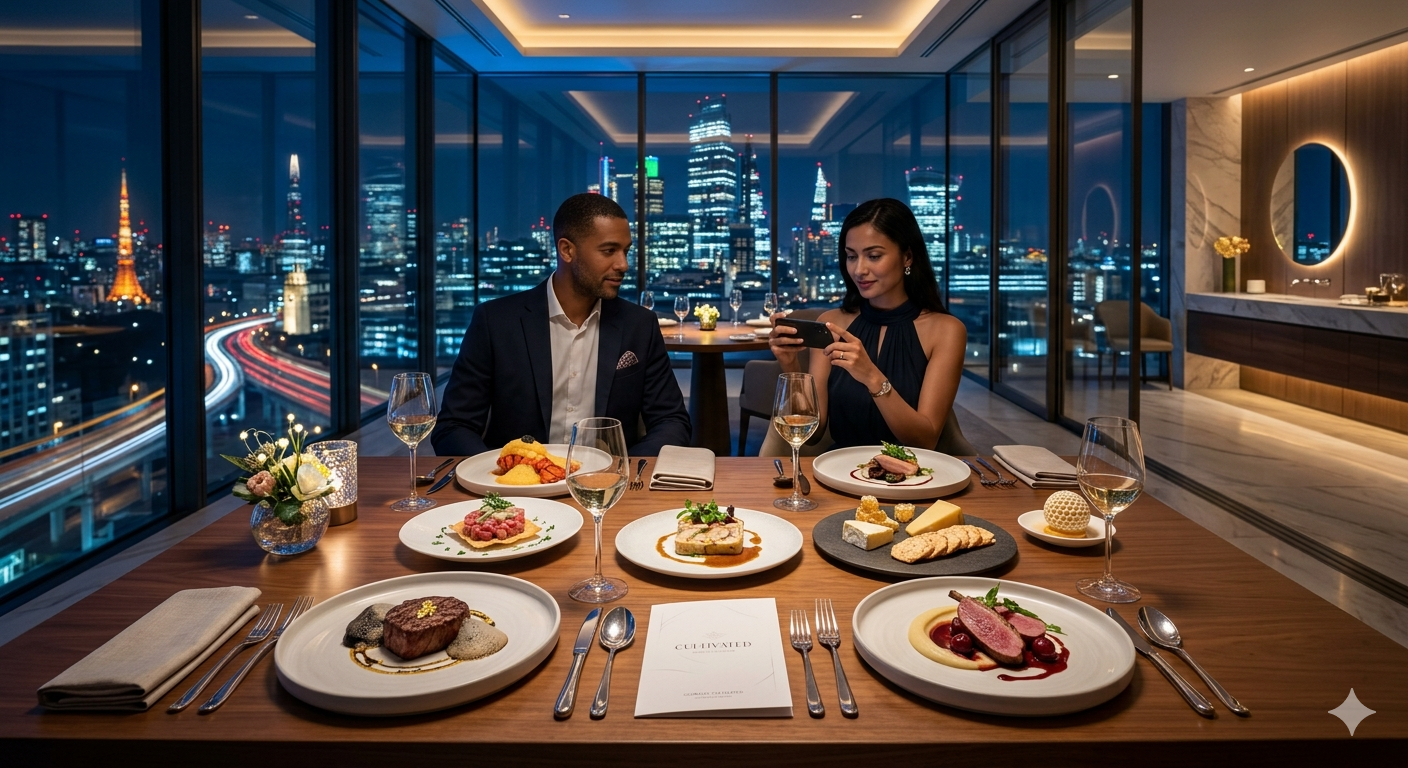
Cultivated Fine Dining: The Rise of Lab-Grown Michelin-Star Menus
The culinary world is witnessing a tectonic shift as we move further into 2026. Luxury is no longer defined solely by rarity or origin, but by the pinnacle of scientific precision and ethical elegance. Lab-grown, or “cultivated” meat, has officially transitioned from a scientific curiosity into the high-octane kitchens of the world’s most acclaimed chefs. In global gastronomy hubs, the inclusion of cultivated proteins on a tasting menu is the new hallmark of a forward-thinking, Michelin-star establishment.
This revolution is being driven by a generation of diners who demand the sensory excellence of premium wagyu or foie gras without the environmental or ethical baggage. Cultivated fine dining offers a controlled purity—a flavor profile designed to be perfect, every single time.
Global Hubs Leading the Cultivated Revolution
As of 2026, specific cities have established themselves as the “Silicon Valleys” of the dinner plate.
| Global Hub | Signature Cultivated Dish | Dining Experience |
|---|---|---|
| Singapore | Cultivated Chicken Galantine | Boutique “Lab-to-Table” bistros |
| San Francisco | Cell-Based Bluefin Tuna Sashimi | High-tech omakase counters |
| Tel Aviv | Bio-Printed Ribeye Steaks | Experimental Mediterranean fusion |
| London | Cultivated Duck Confit | Classic fine dining with a sustainable twist |
Why Michelin Stars are Embracing the Lab
1. Flavor Consistency and Customization
In traditional farming, the flavor of meat is subject to the animal’s diet, stress levels, and environment. Cultivated meat allows chefs to specify the exact fat-to-protein ratio. In 2026, Michelin-star chefs are collaborating directly with biotechnologists to “design” meat with specific marbling patterns that melt at precise temperatures, creating a texture that was previously impossible to achieve in nature.
2. The Ethics of “Guilt-Free” Luxury
The “Green Michelin Star” has become a coveted accolade. Cultivated menus significantly reduce water usage and land degradation. For the traveler seeking a luxurious workation experience in 2026, dining on lab-grown delicacies represents an alignment with modern values of sustainability and animal welfare without sacrificing the “haute” in haute cuisine.
Traveler Tip: The “Cell-Cultured” Reservation
Due to high production costs and limited yields in 2026, cultivated menus at Michelin establishments are often available only as “limited release” tasting events. To secure a seat, diners must often book weeks in advance through dedicated “Future Food” membership platforms or high-end concierge services.
3. Culinary Borderlessness
Cultivated technology allows for the production of exotic or endangered flavors without harming a single animal. We are seeing the emergence of “extinct flavors” in 2026, where DNA from historical or rare breeds is used to create unique dishes that have not been tasted by humanity in centuries. This “culinary archaeology” is a major draw for gastro-tourists.
Did You Know?
By mid-2026, Singapore remains the only nation where cultivated meat is fully integrated into the public food supply, but London and San Francisco are rapidly catching up with “Special Innovation Zones” for high-end dining.
Strategic Conclusion
Cultivated fine dining is not a replacement for traditional food; it is a new category of luxury. As we navigate the global hubs of 2026, the rise of the lab-grown Michelin menu proves that innovation is the most delicious ingredient of all. For the sophisticated traveler, these menus offer a glimpse into a future where the planet and the palate exist in perfect harmony.
At TourVister, we explore the frontiers of travel and lifestyle. Whether it’s a co-working space in Bali or a cultivated dinner in Singapore, we help you stay ahead of the curve. The future is served—bon appétit.