
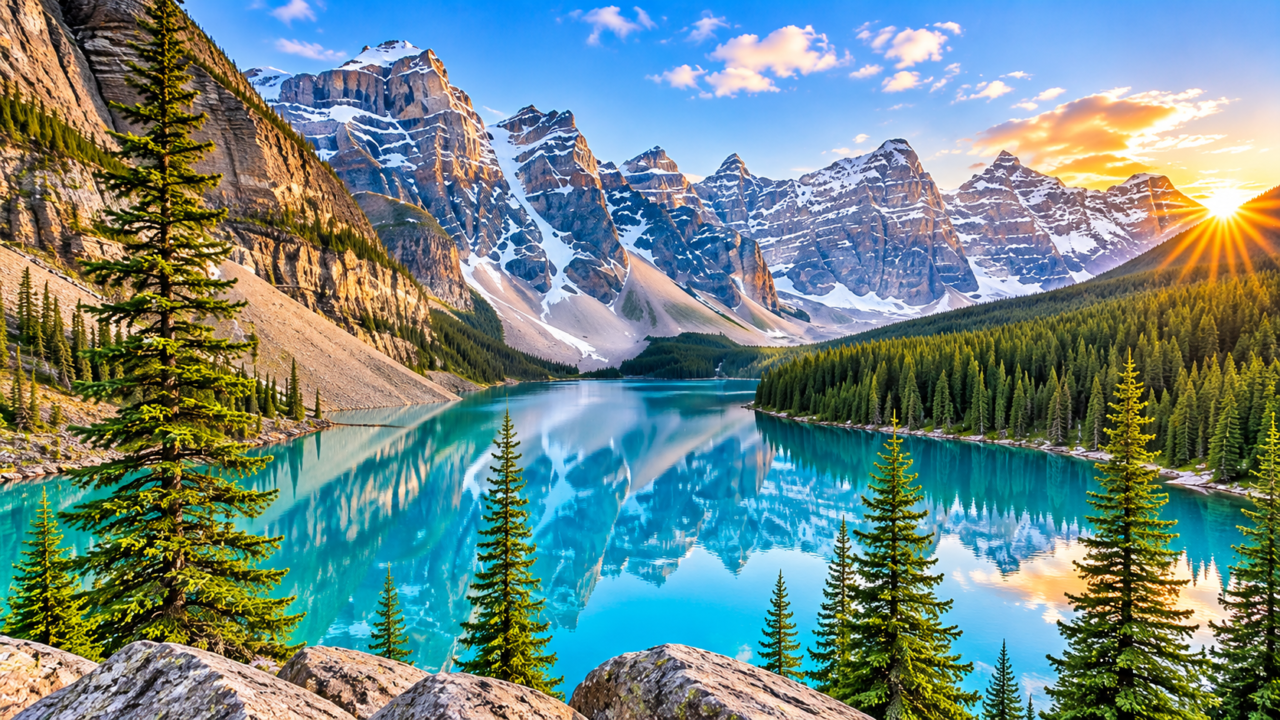
Banff National Park is Canada’s most famous mountain park, and this guide shows you exactly how to plan the perfect trip. You will find the best lakes, easy and epic hikes, 2026 park fees, the Moraine Lake shuttle rules, where to stay and a simple 3-day itinerary.
Whether you are coming from the USA, the UK or elsewhere in Canada, Banff National Park rewards good planning. Popular spots fill up early, some roads are closed to private cars and prices change by season. Read this guide before you book and you will avoid the most common mistakes.
Banff National Park quick facts
- Location: Alberta, in the Canadian Rockies, about 90 minutes’ drive west of Calgary
- Best time to visit: mid-June to late September
- Daily adult admission (2026): CAD $12.25 (youth 17 and under free)
- Must-see: Lake Louise, Moraine Lake, Peyto Lake and Johnston Canyon
- Days needed: at least 3, ideally 4 to 5
Where Is Banff National Park?
Banff National Park sits in the province of Alberta, on the eastern side of the Canadian Rockies. It was Canada’s first national park and is part of a UNESCO World Heritage Site.
The town of Banff is the main base inside the park. Lake Louise village is about 45 minutes further north, and the famous Icefields Parkway continues from there towards Jasper National Park.
How to Get to Banff National Park
The nearest major airport is Calgary International Airport (YYC), which has direct flights from many cities in the USA, Canada and the UK. From Calgary, the drive to the town of Banff takes about an hour and a half on the Trans-Canada Highway.
Renting a car gives you the most freedom. If you prefer not to drive, airport shuttle buses run between Calgary Airport and Banff, and the local Roam Transit buses connect the town with Lake Louise and other popular spots.
Entry rules: US citizens can visit Canada with a valid passport. Visitors from the UK and many other visa-exempt countries who fly to Canada need an Electronic Travel Authorization (eTA), which you should only buy on the official Government of Canada website.
Getting Around Banff National Park
A car is the easiest way to explore, but you do not always need one. Roam Transit runs public buses between the town of Banff, Canmore, Lake Louise and popular spots such as Lake Minnewanka and the Banff Gondola, and many routes run more often in summer.
For Lake Louise and Moraine Lake, the Parks Canada shuttle from the Lake Louise Park and Ride is the most practical choice in summer. Cycling is also popular, especially on the Legacy Trail between Canmore and Banff and on the quieter sections of the Bow Valley Parkway. Whatever you choose, plan your day around the shuttle times and start early, because parking at the busiest trailheads fills before 8 a.m. in July and August.
Best Time to Visit Banff National Park
| Season | Months | What to expect |
|---|---|---|
| Summer | Mid-June – August | Blue lakes, all trails open, warm days, biggest crowds |
| Early autumn | September | Golden larch trees, cooler air, fewer people |
| Late autumn | October – November | Quiet, first snow, some roads and shuttles end |
| Winter | December – March | Skiing, frozen lakes, ice walks, snowy scenery |
| Spring | April – early June | Lakes still frozen, wildlife active, lower prices |
For first-time visitors, the best time to see Banff National Park is from mid-June to late September. The high lakes are usually free of ice by mid-June, and the famous turquoise colour is strongest in July and August. September is a favourite for photographers because the larch trees turn bright gold.
Banff National Park Fees in 2026
Everyone who stops in the park needs a valid pass. You can buy it online or at the park gates on the highway.
| Pass | Price (CAD) | Good to know |
|---|---|---|
| Daily admission – adult | $12.25 | Per person, per day |
| Daily admission – senior | $10.75 | Per person, per day |
| Daily admission – youth 17 and under | Free | Always free |
| Daily admission – family/group | $24.50 | Up to seven people in one vehicle |
| Discovery Pass – adult | $83.50 | 12 months at 80+ Parks Canada places |
| Discovery Pass – family/group | $167.50 | 12 months, up to seven people in one vehicle |
Money-saving tip: if you plan to spend about a week in the Rockies, the Discovery Pass usually costs less than paying daily fees. It also covers nearby Jasper, Yoho and Kootenay national parks. Check current prices on the official Banff National Park fees page.
Lake Louise and Moraine Lake: How to Visit in 2026
These two lakes are the stars of Banff National Park, and access rules are important.
- Moraine Lake Road is closed to personal vehicles all year. In summer you reach the lake by Parks Canada shuttle, a licensed tour company or on foot or bike.
- Parks Canada shuttles leave from the Lake Louise Park and Ride at the Lake Louise Ski Resort. Reservations are required.
- Book early: part of the seats are released in spring, and more seats are released two days before each departure.
- Your shuttle ticket does not include park admission. You still need a daily pass or Discovery Pass.
Lake Louise lakeshore can be reached by car, but the parking lot fills very early in summer and charges a fee. Taking the shuttle is usually less stressful. See the latest details on the Parks Canada Lake Louise and Moraine Lake page.
Best Lakes in Banff National Park
Lake Louise
The most famous lake in Canada sits below Victoria Glacier. Walk the flat lakeshore trail, rent a canoe in summer or skate on the frozen lake in winter.
Moraine Lake
Surrounded by the Valley of the Ten Peaks, Moraine Lake is famous for its bright blue water. Climb the short Rockpile Trail for the classic view.
Peyto Lake
On the Icefields Parkway, a short walk leads to a viewpoint over this wolf-head shaped lake. It is one of the most photographed views in Banff National Park.
Bow Lake
Calm and wide, Bow Lake reflects the mountains perfectly on still mornings. It is an easy roadside stop on the Icefields Parkway.
Lake Minnewanka and Two Jack Lake
Just minutes from the town of Banff, these lakes are perfect for sunrise photos, picnics and boat cruises in summer.
Best Hikes in Banff National Park
| Hike | Area | Time (return) | Difficulty |
|---|---|---|---|
| Johnston Canyon (Lower and Upper Falls) | Bow Valley Parkway | 1.5–2 hours | Easy |
| Tunnel Mountain | Town of Banff | 1.5 hours | Easy to moderate |
| Lake Agnes Tea House | Lake Louise | 2.5–3 hours | Moderate |
| Plain of Six Glaciers | Lake Louise | 4–5 hours | Moderate |
| Larch Valley | Moraine Lake | 4 hours | Moderate |
| Sulphur Mountain | Town of Banff | 3–4 hours (or take the gondola) | Moderate to hard |
Some trails in the Lake Louise and Moraine Lake area, especially Larch Valley, can have group restrictions when bears are active. Check trail conditions before you set out.
Drive the Icefields Parkway
The Icefields Parkway runs from Lake Louise to Jasper and is often called one of the most beautiful drives in the world. Even if you only drive part of it, stop at Bow Lake, Peyto Lake and the Columbia Icefield area.
There is almost no mobile signal and very few fuel stations along the road, so fill up in Lake Louise and download offline maps before you go.
Where to Stay in Banff National Park
| Base | Best for | Good to know |
|---|---|---|
| Town of Banff | Restaurants, shops, easy access to most sights | Most hotel choice, books up fast in summer |
| Lake Louise village | Early starts at Lake Louise and Moraine Lake | Fewer options, often higher prices |
| Canmore | Better value just outside the park | About 20 minutes from the town of Banff |
| Campgrounds | Budget travellers and nature lovers | Reserve through Parks Canada months ahead |
For a 3 to 4 day trip, many travellers stay in the town of Banff or Canmore and make day trips to Lake Louise. If you want sunrise at the lakes, spend one night near Lake Louise.
3-Day Banff National Park Itinerary
Day 1: Town of Banff
Ride the Banff Gondola or hike Sulphur Mountain, walk Banff Avenue, relax at the Banff Upper Hot Springs and drive the Lake Minnewanka loop at sunset.
Day 2: Lake Louise and Moraine Lake
Take an early Parks Canada shuttle to Moraine Lake, then connect to Lake Louise. Hike to the Lake Agnes Tea House for lunch and return along the lakeshore.
Day 3: Johnston Canyon and the Icefields Parkway
Walk Johnston Canyon in the morning before the crowds, then drive north on the Icefields Parkway to Bow Lake and Peyto Lake.
How Much Does a Trip to Banff National Park Cost?
Accommodation is the biggest expense, especially in July and August. Here is how to keep your Banff National Park budget under control:
- Stay in Canmore: hotels are often cheaper than in the town of Banff.
- Visit in September or early June: prices drop as summer crowds fade.
- Use public transport: Roam Transit and Parks Canada shuttles save parking fees.
- Pack picnics: grocery stores in Banff and Canmore are much cheaper than lakeside cafés.
- Choose free hikes: most of the best trails cost nothing beyond your park pass.
Wildlife Safety in Banff National Park
Banff National Park is home to grizzly bears, black bears, elk, bighorn sheep, wolves and more. Seeing them is a highlight, but always keep your distance.
- Stay at least 100 metres away from bears, wolves and cougars, and at least 30 metres from elk, deer and sheep.
- Never feed wildlife. It is dangerous and illegal.
- Carry bear spray on hikes and know how to use it.
- Hike in groups and make noise on the trail.
- Stay in your car if animals are near the road, and do not stop in unsafe places.
Top Things to Do in the Town of Banff
- Banff Gondola: ride to the top of Sulphur Mountain for a 360-degree view and walk the boardwalk to the old weather station.
- Banff Upper Hot Springs: soak in warm mineral water with mountain views, perfect after a long hike.
- Bow Falls: an easy riverside walk from downtown to a wide, powerful waterfall.
- Cave and Basin National Historic Site: learn how the discovery of hot springs here led to the creation of Canada’s first national park.
- Vermilion Lakes: a quiet drive just outside town, famous for sunrise reflections of Mount Rundle.
- Banff Avenue: the main street, full of cafés, outdoor shops and restaurants with mountain views.
Banff in Winter: What to Do
Winter turns the park into a snowy playground. The season usually runs from December to March, and it is much quieter than summer outside the ski resorts.
- Skiing and snowboarding: three ski resorts are close to town, including Lake Louise Ski Resort, Sunshine Village and Mt. Norquay.
- Ice walk in Johnston Canyon: walk past frozen waterfalls on catwalks above the creek. Ice cleats are essential.
- Skating on Lake Louise: when conditions allow, part of the frozen lake is cleared for skating in front of the famous hotel.
- Snowshoeing and cross-country skiing: many summer trails become quiet winter routes.
Winter driving needs care. Rental cars in Alberta usually come with all-season tyres, but winter tyres are strongly recommended, especially on the Icefields Parkway, where some sections can close during storms.
Banff or Jasper: Which Should You Visit?
Many travellers wonder whether to choose Banff or Jasper. The best answer is to visit both if you have time, because the Icefields Parkway connects them.
| Feature | Banff | Jasper |
|---|---|---|
| Famous for | Lake Louise, Moraine Lake, the town of Banff | Maligne Lake, dark skies, wildlife |
| Crowds | Very busy in summer | Quieter and more relaxed |
| Distance from Calgary | About 1.5 hours | About 4.5 to 5 hours |
| Best for | First-time visitors, short trips | Longer trips, wildlife lovers |
If you only have three or four days, focus on Banff National Park and drive part of the Icefields Parkway. With a week, add two or three nights in Jasper.
Visiting With Kids
The park is great for families. Children enjoy the gondola, short walks to waterfalls, canoeing on calm lakes and spotting elk and bighorn sheep from the car.
Choose easy trails such as Johnston Canyon Lower Falls, Bow Falls and the Lake Louise lakeshore. Remember that youth 17 and under enter Parks Canada places free, which helps keep family costs down.
Photography Tips
The best light at the lakes comes at sunrise and in the first hours of the morning, when the water is calm and the crowds have not yet arrived.
A polarising filter helps bring out the turquoise colour of the lakes. In September, look for golden larch trees around Larch Valley and Sentinel Pass, and in winter, head to Vermilion Lakes for steaming open water and frosted trees.
Packing List for Banff National Park
- Warm layers and a waterproof jacket, even in summer
- Comfortable hiking boots with good grip
- Bear spray, sold in Banff and Canmore
- Sunscreen and sunglasses, as the mountain sun is strong
- Reusable water bottle and snacks
- Offline maps for the Icefields Parkway
- Ice cleats if you visit between October and May
Common Mistakes to Avoid
- Planning to drive to Moraine Lake. The road is closed to private vehicles.
- Forgetting the park pass. Your shuttle ticket does not include admission.
- Booking hotels too late for July and August.
- Arriving at Lake Louise at midday and expecting to find parking.
- Expecting turquoise lakes in May. Most high lakes are still frozen.
- Getting too close to elk and bears for photos.
Frequently Asked Questions
How many days do you need in Banff National Park?
Three days is enough to see the highlights, including Lake Louise, Moraine Lake and Johnston Canyon. Four to five days lets you add the Icefields Parkway and longer hikes.
Can you drive to Moraine Lake?
No. Moraine Lake Road is closed to personal vehicles. Use the Parks Canada shuttle, a licensed tour company, or walk or cycle.
How much is the Banff National Park pass in 2026?
Daily admission is CAD $12.25 for adults, $10.75 for seniors and $24.50 for a family or group in one vehicle. Youth 17 and under enter free.
What is the best month to visit Banff National Park?
July and August offer the bluest lakes and warmest weather, while September brings golden larches and fewer crowds.
Is Banff worth visiting in winter?
Yes. Winter brings skiing, snowshoeing, frozen lakes and quiet trails. Moraine Lake is closed, but Lake Louise becomes a winter wonderland.
Final Thoughts
Banff National Park is one of the most beautiful places on Earth, and a little planning makes all the difference. Book your hotel and shuttle early, buy your park pass, start your days at sunrise and leave time to simply enjoy the views.
Follow this guide and your trip to Banff National Park will be relaxed, affordable and truly unforgettable. Save this page, share it with your travel partner and start planning the mountain adventure you have always wanted.
Planning more adventures? Explore our Canada travel guides, read our guide to the best time to visit Yellowstone or visit the TourVister home page.



1 comment