
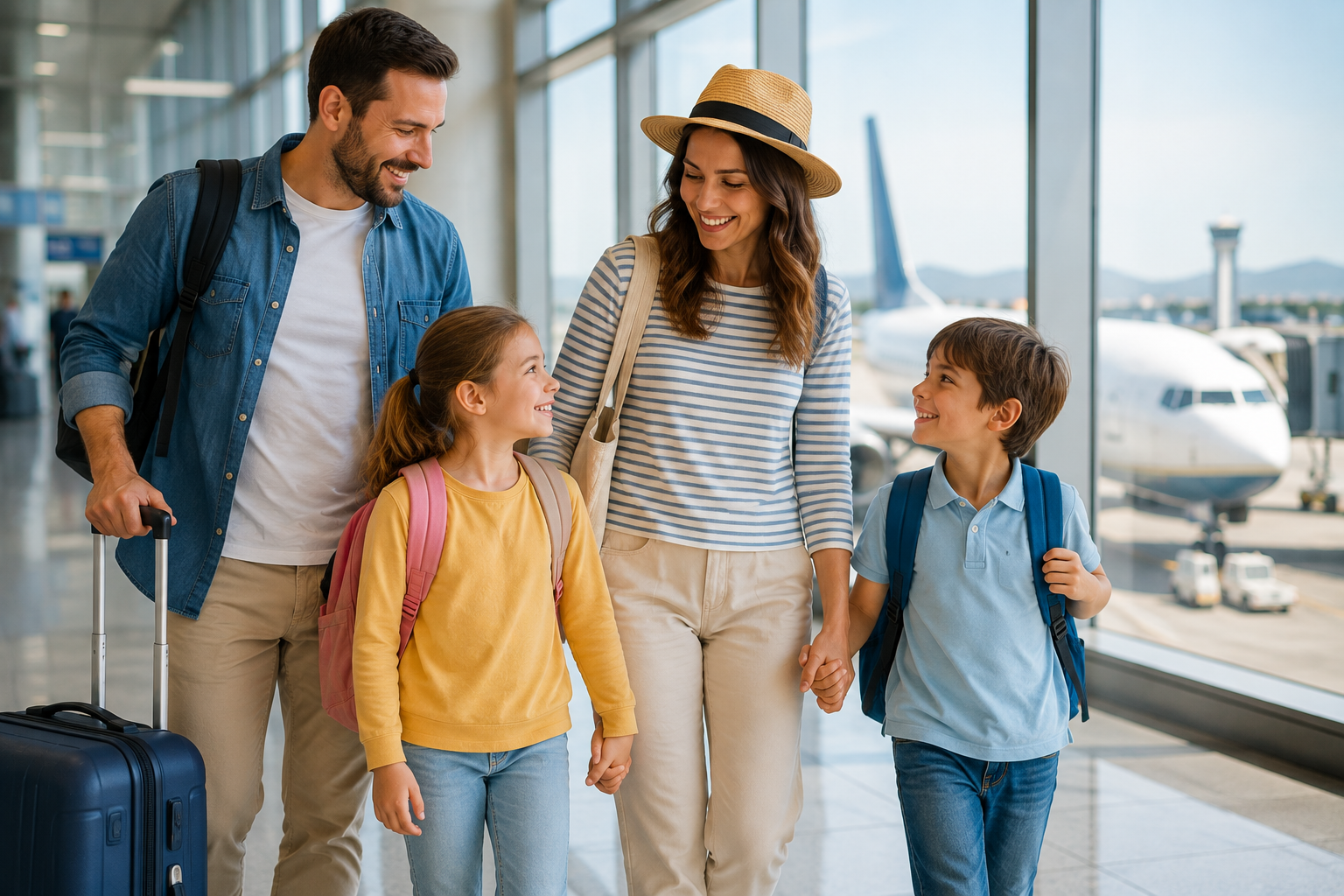
Traveling with children creates memories that last a lifetime, but it also asks more of you as a parent. Busy airports, unfamiliar streets and long travel days can feel stressful when little ones are in tow. The good news is that most problems can be avoided with a bit of preparation. In this guide, you will learn how to travel safely with kids using 10 practical tips that work for flights, road trips and city holidays alike.
Quick Summary
- Plan the trip around your children’s ages, energy and needs
- Keep documents, emergency numbers and a small first-aid kit within reach
- Stay close in crowds and teach your kids what to do if they get lost
- Use proper car seats and watch out for water, sun and health issues
- Stay flexible, because a calm parent makes a safer and happier trip
In This Guide
- Plan Ahead and Choose a Kid-Friendly Destination
- Keep Documents and Emergency Contacts Ready
- Pack a Smart Carry-On Kit
- Stay Close in Airports and Crowds
- Teach Kids What to Do If They Get Lost
- Use Car Seats and Safe Transport
- Prepare for Health Needs and Get Insurance
- Keep Kids Hydrated, Fed and Rested
- Check Your Accommodation, Water and Sun Safety
- Stay Flexible and Keep Calm
- Frequently Asked Questions
1Plan Ahead and Choose a Kid-Friendly Destination
Safe travel starts long before you leave home. Choose a destination that suits your children’s ages and energy levels. A toddler will usually enjoy a calm beach town far more than a crowded city with long walking distances and late dinners. Teenagers, on the other hand, may love a lively city with plenty to explore.
Before you book, check a few basics:
- How far is the hotel from the airport or station?
- Is there a hospital or clinic close to where you are staying?
- Are the main attractions suitable for children?
- What will the weather be like during your travel dates?
Then build your itinerary around rest, not just sightseeing. Plan one main activity per day and leave gaps for naps, snacks and play. Children who are rushed from place to place get tired, and tired children are more likely to wander off, fall or melt down in public.
Ask your hotel for a room on a lower floor if you are traveling with toddlers. It is easier to move around and safer when there are balconies and windows.
2Keep Documents and Emergency Contacts Ready
Make sure every family member has the correct travel documents, such as passports and any visas your destination requires. Check expiry dates early, because many countries require a passport to be valid for several months after you arrive.
Keep digital and paper copies of important documents in separate bags. Save these numbers on every adult’s phone and write them on a small card as well:
- Your hotel or host’s phone number and address
- A family member or friend back home
- Your travel insurance emergency line
- Your country’s embassy or consulate in the place you are visiting
Requirements for children who travel with only one parent, or with other relatives, differ between countries. Always confirm them on the official government, embassy or airline website well before departure.
3Pack a Smart Carry-On Kit
Never rely on your checked luggage for essentials. Delays happen, and a hungry or uncomfortable child makes everything harder. Keep one small bag within reach that includes:
- Snacks and a refillable water bottle
- Wet wipes and hand sanitizer
- A spare set of clothes for each child, and one extra top for you
- Regular medicines and a basic first-aid kit
- A comfort toy or blanket
- Books, drawing supplies or a tablet with downloaded shows
What you need most depends on how old your children are. Use this table as a quick guide:
| Age Group | Main Safety Focus | Useful Items to Carry |
|---|---|---|
| Babies (0 to 2) | Constant supervision, feeding and safe sleep | Milk or formula, diapers, wipes, baby carrier, spare clothes, familiar blanket |
| Toddlers (2 to 4) | Wandering, choking hazards and car seats | Safe snacks, harness or carrier, comfort toy, extra clothes, wet wipes |
| Kids (5 to 12) | Staying with the group, sun and water safety | Contact card or bracelet, sunscreen, hat, water bottle, books or games |
| Teens (13+) | Phones, independence and meeting points | Charged phone, power bank, document copies, emergency contact list |
Good gear makes every trip easier. For more ideas, read our guide on essential travel gear every adventurer must have.
4Stay Close in Airports and Crowds
Busy places are where children are most likely to get separated from their parents. Set a simple rule from the start: kids stay within arm’s reach in airports, stations, markets and tourist sights. Hold hands, or use a carrier or stroller for toddlers who tire quickly.
A few habits make crowds much safer:
- Dress children in bright, easy-to-spot colors
- Take a quick photo of each child every morning so you know exactly what they are wearing
- Count heads whenever you leave a place or get on and off transport
- Keep valuables in a front bag or zipped pocket so both hands stay free for the children
In very crowded places, a lightweight child harness or a wristband with your phone number can add extra peace of mind.
5Teach Kids What to Do If They Get Lost
Even careful parents can lose sight of a child for a moment, so a short chat before the trip makes a big difference. Explain calmly, without scaring them, what to do if they cannot see you:
- Stop and stay where you are, or go straight to the nearest uniformed staff member, police officer or information desk.
- If no staff are nearby, look for a parent with children and ask for help.
- Never leave with anyone, even a person who says they know you.
- Tell the helper your name and your parent’s phone number.
Help older children memorize your phone number. For younger ones, write it on a card in their pocket or on a bracelet. At every new place, agree on a meeting point such as an information desk or a clear landmark, so everyone knows where to go if you get separated.
6Use Car Seats and Safe Transport
Road safety matters wherever you travel. Use an age-appropriate car seat or booster whenever the vehicle and local law allow it, and make sure every child wears a seat belt. If you rent a car or book a taxi abroad, ask the company in advance whether child seats are available, because rules and standards differ from country to country.
On trains, buses and ferries, keep children seated and away from doors, platform edges and moving escalators. When walking, always place yourself between your child and the road, and hold hands when crossing.
Even a few minutes alone in a parked car can be dangerous, especially in hot weather. Take your children with you every time.
7Prepare for Health Needs and Get Insurance
Visit your doctor or pediatrician before a long trip, especially if you are traveling abroad. They can advise you on vaccinations, motion sickness and medicines suited to your child’s age and health.
Pack a basic first-aid kit that includes:
- Plasters and antiseptic wipes
- A thermometer
- Your child’s regular medicines in their original packaging
- Any fever or pain relief your doctor recommends for your child’s age
- Oral rehydration sachets, if your doctor suggests them for the destination
Choose travel insurance that covers medical care and trip changes, and save the insurer’s emergency number on every phone. On arrival, find out where the nearest clinic or hospital is, so you are not searching for it in a stressful moment.
This guide offers general travel advice and is not a substitute for medical advice. Always check health requirements and recommendations for your destination with a doctor or an official health authority.
8Keep Kids Hydrated, Fed and Rested
Many travel meltdowns are really hunger, thirst or tiredness in disguise. Offer water and healthy snacks regularly, and try to keep your children’s usual meal and nap times as much as possible, even when you are on the move.
Be careful with street food and tap water if you are not sure they are safe. Bottled water, freshly cooked hot meals and fruit you can peel yourself are usually the safest choices. After long flights, give everyone a day or two to adjust to the new time zone. Rested children are calmer, safer and far more enjoyable to travel with.
9Check Your Accommodation, Water and Sun Safety
When you arrive, take five minutes to look around your room. Children are curious, and small hazards are easy to miss. Check for:
- Balcony doors and windows that open easily
- Sharp furniture edges and loose cords
- Small objects within a toddler’s reach
- The location of emergency exits and the fire escape route
Water and sun need special attention on holidays:
- Never leave children unattended near pools, beaches, rivers or lakes, even for a moment
- Stay within arm’s reach of young swimmers and use proper flotation devices where needed
- Use sunscreen suitable for children, plus hats and light clothing
- Avoid the hottest hours of the day and take regular shade breaks
10Stay Flexible and Keep Calm
No trip goes exactly to plan. Flights get delayed, restaurants are full and children get cranky at the worst moments. Kids pick up on your mood, so staying calm helps everyone feel safe.
Keep your schedule loose, leave extra time for transfers and be ready to change plans if someone is tired or unwell. A shorter day that ends happily is always better than a packed one that ends in tears. Safety and comfort always come before sticking to an itinerary.
Frequently Asked Questions
What is the safest way to travel with a toddler?
Choose a simple itinerary, keep your toddler within arm’s reach in public places and carry familiar comfort items, snacks and a spare set of clothes. A carrier or harness helps in crowded places, and an age-appropriate car seat is important for any car journey.
What should I put in my child’s travel first-aid kit?
Include plasters, antiseptic wipes, a thermometer, any regular prescribed medicines and child-appropriate pain or fever relief recommended by your doctor. Keep medicines in their original packaging and check airline rules on carrying them.
How can I stop my child from getting lost while traveling?
Set a clear rule to stay close, agree on a meeting point at each new place and make sure your child knows your name and phone number. For younger children, a card or wristband with your contact details is helpful.
Do I need travel insurance when traveling with children?
It is strongly recommended. Good insurance covers medical care, cancelled flights and lost luggage, which can be costly and stressful when you are far from home with children.
At what age is it safe to travel with a baby?
This depends on your baby’s health and the type of trip. Always speak to your pediatrician and check the airline’s policy before booking a flight with a newborn.
Final Thoughts
Learning how to travel safely with kids is mostly about preparation, patience and clear family rules. Plan ahead, pack smart, teach your children what to do if they get lost and keep health and transport safety in mind. With these 10 tips, you can spend less time worrying and more time enjoying your journey together.
Keep Planning Your Family Trip
Explore more practical advice and destination ideas on TourVister.
More Travel Tips Travel Guides