
10 Iconic Landmarks to Visit in Rome, Italy

Rome, often dubbed the “Eternal City,” is a living museum where ancient ruins, Baroque architecture, and vibrant Italian culture intertw seamlessy. Walking through its cobbled streets feels like traveling back in time, with breathtaking history around every corner.
Whether you are an avid history buff, an art enthusiast, or a passionate foodie, exploring Rome’s monumental treasures is an unforgettable journey. Here is a curated guide to the 10 iconic landmarks to visit in Rome, Italy.
1. The Colosseum
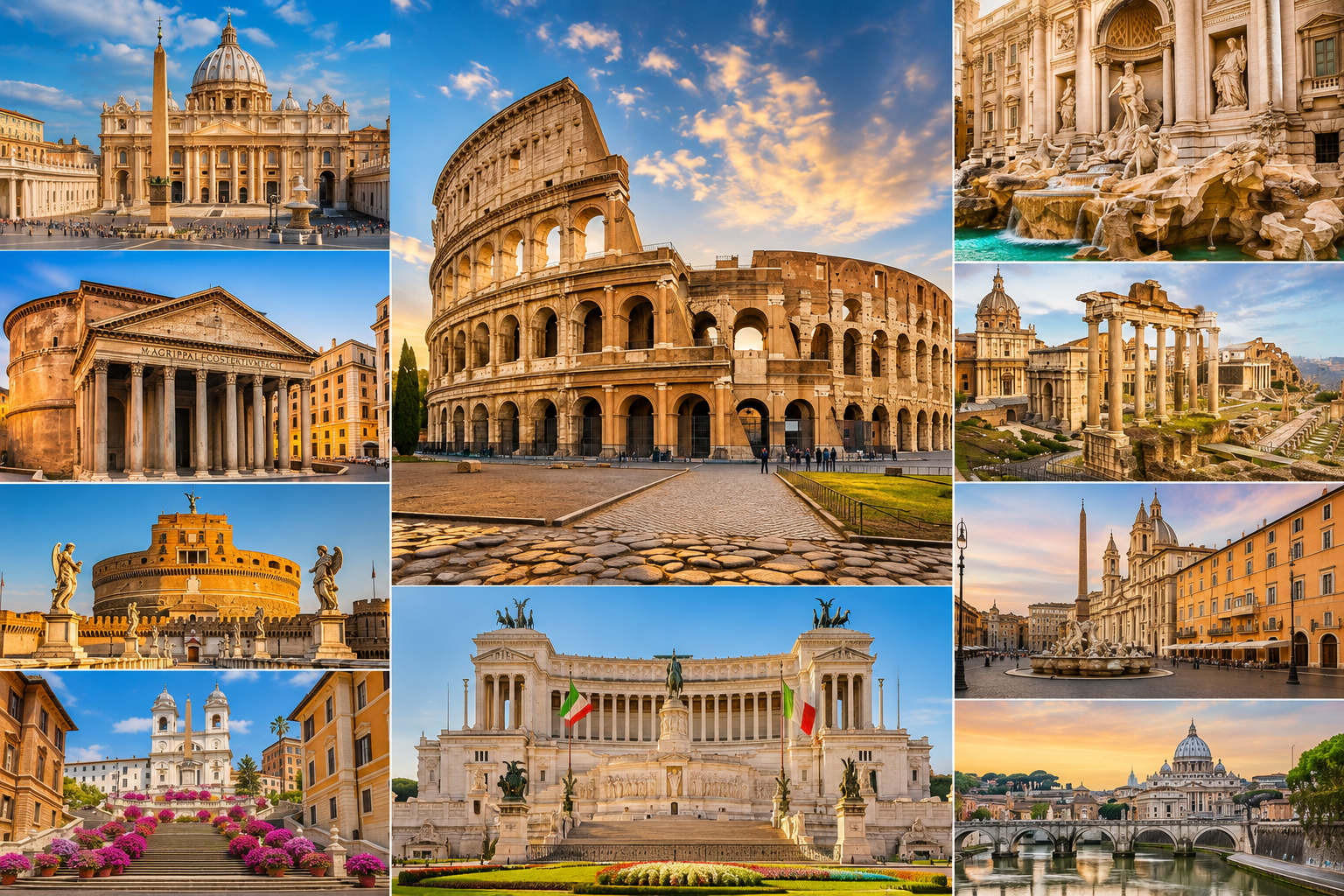
As the largest amphitheater ever built, the Colosseum stands as a testament to the engineering brilliance and sheer power of the ancient Roman Empire. Once host to gladiatorial contests and public spectacles, it remains Rome’s most iconic symbol.
2. The Pantheon
The Pantheon is one of the best-preserved ancient Roman monuments in existence. Constructed over nearly two millennia ago, its massive concrete dome features a central opening—the Oculus—that bathes the marble interior in dramatic natural light.
3. The Roman Forum & Palatine Hill
Once the beating heart of ancient Roman public life, the Roman Forum is a sprawling complex of ruined temples, basilicas, and triumphal arches. Right next to it lies Palatine Hill, offering panoramic views of the city ruins and ancient imperial palaces.
4. St. Peter’s Basilica & Vatican City
Located within Vatican City—the world’s smallest independent nation—St. Peter’s Basilica is a masterpiece of Renaissance architecture. Climb to the top of Michelangelo’s dome for sweeping views across St. Peter’s Square.
5. Trevi Fountain
Rome’s largest and most famous Baroque fountain is a breathtaking spectacle of white marble sculptures and rushing waters. Don’t forget to toss a coin over your left shoulder into the fountain to ensure your future return to Rome!
6. The Sistine Chapel (Vatican Museums)
Inside the vast Vatican Museums complex lies the Sistine Chapel, world-renowned for Michelangelo’s legendary ceiling frescoes, including The Creation of Adam and The Last Judgment.
7. Spanish Steps
Connecting the Piazza di Spagna at the base with the Trinita dei Monti church at the top, these 135 monumental steps are a popular spot for people-watching and soaking in classical Italian street atmosphere.
8. Piazza Navona
Built on the site of an ancient Roman stadium, Piazza Navona is a lively public square famous for its elegant fountains, including Bernini’s celebrated Fountain of the Four Rivers, along with street performers and outdoor cafes.
9. Castel Sant’Angelo
Originally commissioned by Emperor Hadrian as a mausoleum, this imposing fortress on the banks of the Tiber River later served as a papal refuge and prison. The rooftop terrace offers magnificent views of the river and cityscape.
10. Borghese Gallery & Gardens
Housed in a grand villa surrounded by lush gardens, the Borghese Gallery contains an extraordinary private collection of masterpieces by Bernini, Caravaggio, and Raphael.
Summary Matrix of Rome Landmarks:
- The Colosseum: Legendary ancient Roman amphitheater and architectural marvel.
- The Pantheon: Ancient temple featuring the world’s largest unreinforced concrete dome.
- St. Peter’s Basilica: Renaissance grandeur and religious heart of Western Catholicism.
- Trevi Fountain: World-famous Baroque fountain masterpiece in the heart of Rome.
- Sistine Chapel: Marvel at Michelangelo’s timeless Renaissance ceiling frescoes.
Final Thoughts
Rome is a city that captures the imagination like no other. By visiting these iconic historic landmarks, you will experience the rich layers of art, culture, and architecture that defined Western civilization. Pack comfortable walking shoes, enjoy a fresh gelato, and explore the timeless magic of Rome!