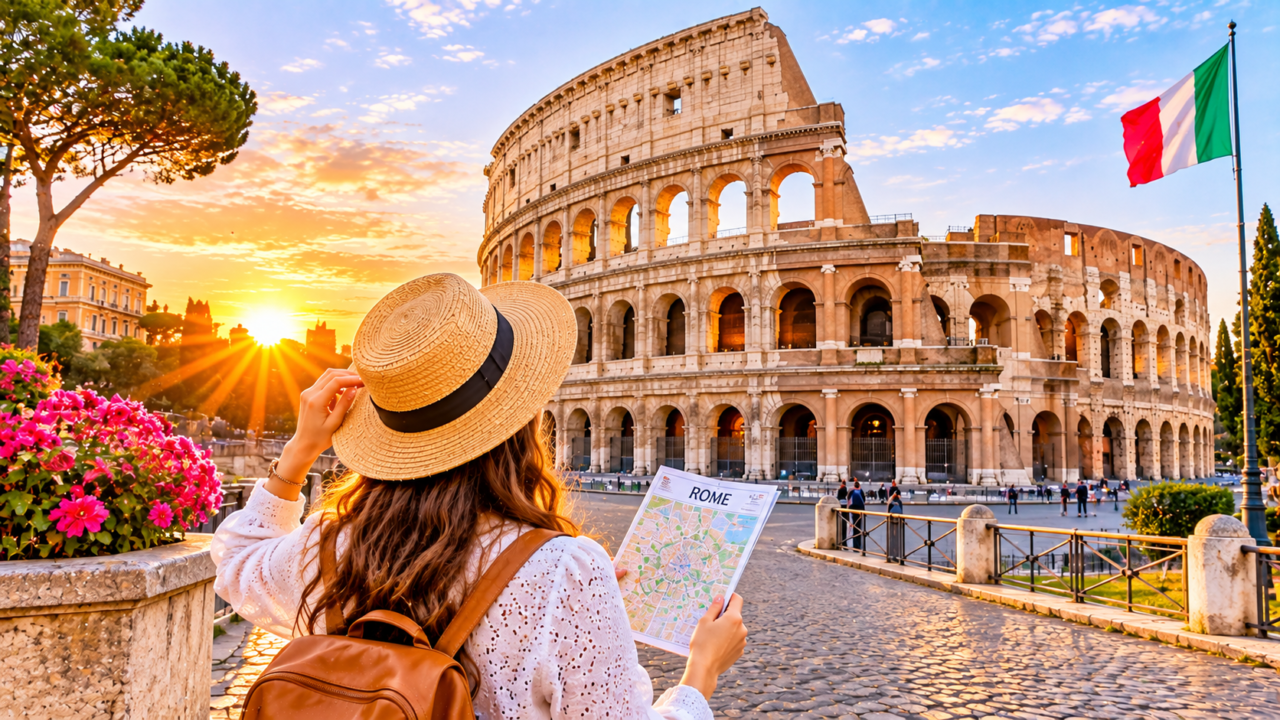
Rome on a budget is easier than you might think. The Eternal City is packed with ancient ruins, Baroque fountains, grand piazzas and world-famous churches, and many of them cost nothing to see. With a little planning, you can enjoy the best of Rome without spending a fortune.
This guide shows you how to explore Rome on a budget, whether you are travelling from the USA, the UK, Canada or elsewhere. You will find 30 free things to do, the latest rules on paid landmarks, cheap ways to get around, budget food tips, where to stay and an easy 3-day itinerary.
Rome on a budget: quick tips
- Best free church: St. Peter’s Basilica is free to enter (the dome climb costs extra)
- Free Sundays: state museums and sites are free on the first Sunday of the month, and the Vatican Museums on the last Sunday
- New fees: the Pantheon charges €5, and getting close to the Trevi Fountain basin now costs €2
- Cheap eats: pizza by the slice, supplì, markets and free drinking water from public fountains
- Cheapest months: November and January to March, outside holidays
Is Rome Expensive? Planning Rome on a Budget
Rome is cheaper than London or Paris in many ways. Food can be very good value, the historic centre is compact enough to explore on foot, and many of the most beautiful sights are open-air piazzas, fountains and churches that are free to enter.
The main costs are hotels in the centre and tickets for big attractions such as the Colosseum and the Vatican Museums. The secret to Rome on a budget is to choose your paid highlights carefully, use the free museum days and eat where locals eat.
Before You Go: Entry Rules
Visitors from the USA, the UK, Canada and many other countries can visit Italy without a visa for short stays of up to 90 days in any 180-day period. The EU’s Entry/Exit System (EES) now records fingerprints and a photo at the border on your first visit.
The ETIAS travel authorisation is not yet operating, but it will be required in the future. Read our full guide to ETIAS and EES before you book.
Cheapest Time to Visit Rome
November and January to March are usually the cheapest months for hotels, outside Christmas, New Year and Easter. The weather is cooler, but queues are shorter and the city feels more local.
Spring and early autumn are lovely but busier and more expensive. July and August are very hot and crowded, and some local restaurants close in mid-August. For more seasonal advice, read our guide to the best time to visit Europe.
Getting From the Airport to Rome on a Budget
| Airport | Cheapest option | Good to know |
|---|---|---|
| Fiumicino (FCO) | FL1 regional train or airport bus | The Leonardo Express to Termini is faster but costs more |
| Ciampino (CIA) | Airport bus to Termini, or bus plus train | Used by many budget airlines |
Taxis have fixed fares from both airports to the historic centre, which can be good value for a group, but trains and buses are far cheaper if you travel alone or as a couple.
How to Get Around Rome on a Budget
- Walk: the historic centre is compact, and walking from the Colosseum to the Pantheon and Piazza Navona takes well under an hour.
- Use the metro: the metro is useful for the Vatican, the Colosseum and Termini station. You can tap in with a contactless bank card or phone.
- Take the bus or tram: buses reach areas the metro does not, including Trastevere. Check routes and fares on the official ATAC website.
- Consider a travel pass: 24, 48 and 72-hour passes are good value if you will use public transport several times a day.
- Avoid taxis for short trips: traffic in the centre is slow and walking is often quicker.
30 Free Things to Do in Rome
These free experiences are the heart of any trip to Rome on a budget.
Free Landmarks and Piazzas
- See the Trevi Fountain from the piazza: viewing the fountain from the square is free. Since February 2026, non-residents pay €2 to go down the steps to the basin during the day, but early morning and late evening visits are free and far less crowded.
- Visit the Spanish Steps: walk up for views over Via Condotti, but do not sit on the steps, as this is banned and can lead to a fine.
- Explore Piazza Navona: Bernini’s Fountain of the Four Rivers, street artists and Baroque churches.
- Admire the Pantheon from outside: the portico and piazza are free, and the €5 entry is one of the best-value tickets in Rome.
- Walk around Piazza del Popolo: a grand square with twin churches and an Egyptian obelisk.
- Climb Capitoline Hill: Michelangelo designed the piazza, and the terraces behind it give a superb free view over the Roman Forum.
- See the Colosseum from outside: walk around the arena and the Arch of Constantine for free photos.
- Visit Circus Maximus: the former chariot-racing stadium is now a long open park.
- Find the Mouth of Truth: a famous marble mask in the portico of Santa Maria in Cosmedin.
- Peek through the Aventine Keyhole: a tiny keyhole that frames a perfect view of St. Peter’s dome.
Free Churches With Masterpieces
Rome’s churches are like free art galleries, and they are a highlight of Rome on a budget.
- St. Peter’s Basilica: the largest church in the world, with Michelangelo’s Pietà, is free to enter. Expect a security queue and dress modestly.
- St. Peter’s Square: Bernini’s vast colonnade is free to explore.
- San Luigi dei Francesi: three paintings by Caravaggio, free to see.
- Santa Maria del Popolo: more Caravaggio masterpieces, plus a Raphael-designed chapel.
- San Pietro in Vincoli: Michelangelo’s powerful statue of Moses.
- Santa Maria Maggiore: one of Rome’s four major basilicas, with glittering mosaics.
- San Giovanni in Laterano: the cathedral of Rome, with giant apostle statues.
- Santa Maria in Trastevere: beautiful golden mosaics in one of the oldest churches in the city.
Churches are working places of worship, so cover shoulders and knees and stay quiet during services.
Free Parks and Viewpoints
- Villa Borghese gardens: a huge park with lakes, paths and fountains (the Borghese Gallery itself is paid and must be booked).
- Pincio Terrace: a classic sunset view over Piazza del Popolo and the domes of Rome.
- Orange Garden (Giardino degli Aranci): a peaceful garden on the Aventine Hill with river views.
- Janiculum Hill (Gianicolo): one of the best panoramic views of the whole city.
- Villa Doria Pamphilj: Rome’s largest public park, loved by local joggers and families.
- Appian Way: walk or cycle along the ancient Roman road, lined with ruins and umbrella pines.
Free Neighbourhoods and Experiences
- Trastevere: cobbled lanes, ivy-covered buildings and lively evening streets.
- Monti: a stylish neighbourhood with vintage shops near the Colosseum.
- Jewish Ghetto: historic streets famous for Roman-Jewish food.
- Campo de’ Fiori market: a colourful morning market in a historic square.
- Largo di Torre Argentina: ancient temples where Julius Caesar was killed, visible from the street, along with resident cats.
- Free walking tours: tip-based tours run daily in the historic centre.
Free Museum Days in Rome
Free days are one of the best ways to enjoy Rome on a budget, but they are very popular, so arrive early or book where reservations are required.
- First Sunday of the month: Italian state museums and archaeological sites are free, including the Colosseum area and the Borghese Gallery. Booking rules vary by site and spaces go quickly.
- Last Sunday of the month: the Vatican Museums and Sistine Chapel are usually free in the morning, with very long queues. Check the official Vatican Museums website for dates and closures.
- Young visitors: many state museums are free for under-18s, and EU citizens aged 18 to 25 often get reduced tickets.
Paid Attractions Worth the Money
Exploring Rome on a budget does not mean skipping the big sights. If you choose a few, consider the Colosseum, Roman Forum and Palatine Hill on one combined ticket, the Vatican Museums with the Sistine Chapel, the Pantheon and the Borghese Gallery.
Always buy tickets on official websites, such as the official Colosseum website. Resellers near the sites often charge much more. Book early, because timed tickets sell out, especially in spring and summer.
Eating in Rome on a Budget
- Pizza al taglio: pizza by the slice, sold by weight, is cheap, fast and delicious.
- Supplì: fried rice balls with mozzarella inside, a classic Roman snack.
- Trapizzino: a pocket of pizza bread filled with Roman stews.
- Markets: buy fruit, bread, cheese and cured meats for a picnic in a park.
- Coffee at the bar: drinking espresso standing at the counter is much cheaper than sitting at a table.
- Aperitivo: some bars serve snacks with early-evening drinks, which can make a light dinner.
- Free water: Rome’s “nasoni” drinking fountains provide fresh, free water all over the city, so carry a refillable bottle.
Avoid restaurants with picture menus and staff waiting outside near the big sights. Walk a few streets away, look for places full of locals and check whether a cover charge (coperto) is added to the bill. Simple Roman pasta dishes like cacio e pepe, carbonara and amatriciana are filling and affordable in neighbourhood trattorias.
Where to Stay in Rome on a Budget
| Area | Why it is good value | Good to know |
|---|---|---|
| Termini / Esquilino | Many budget hotels and hostels | Best transport links; choose a well-reviewed street |
| Monti | Walkable to the Colosseum | Charming but a little pricier |
| Prati | Near the Vatican, calm and safe | Good restaurants and metro access |
| Trastevere | Atmospheric and lively | Can be noisy at night |
| San Giovanni | Cheaper hotels on the metro | Easy ride to the centre |
Rome adds a city tourist tax per person per night to hotel stays, often paid on arrival, so include it when you compare prices. Staying near a metro station or within walking distance of the centre is the smartest way to keep your Rome on a budget trip simple.
3-Day Rome on a Budget Itinerary
Day 1: Ancient Rome
Start early at the Colosseum, then visit the Roman Forum and Palatine Hill on a combined ticket. In the afternoon, climb Capitoline Hill for the free Forum view, see the Mouth of Truth and Circus Maximus, then end with sunset at the Orange Garden and a peek through the Aventine Keyhole.
Day 2: Vatican and Trastevere
Arrive early at St. Peter’s Basilica, explore St. Peter’s Square, and visit the Vatican Museums if it fits your budget. In the afternoon, walk up the Janiculum Hill for the view, then head down to Trastevere for pizza and an evening stroll.
Day 3: Fountains and Piazzas
See the Trevi Fountain at sunrise, then walk to the Pantheon, San Luigi dei Francesi and Piazza Navona. After lunch, continue to the Spanish Steps, Piazza del Popolo and the Pincio Terrace for sunset over the city.
Rome on a Budget With Kids
Rome is a fantastic city for families. Children love the Colosseum, gelato breaks, the Mouth of Truth, rowing boats and bikes in Villa Borghese, and spotting cats at Largo di Torre Argentina. Many state museums are free for under-18s, which helps a lot.
Plan short sightseeing blocks, take breaks in parks and keep water bottles filled at the nasoni. For more ideas, read our guide on how to travel with kids.
Free Things to Do in Rome at Night
Rome is magical after dark, and evenings are one of the best times to enjoy Rome on a budget. The Trevi Fountain is free to approach late in the evening, the Colosseum glows under floodlights, and Piazza Navona fills with street performers.
Walk across the Tiber bridges at night, enjoy the lively streets of Trastevere and Monti, and take in the view of the illuminated domes from the Janiculum Hill. In summer, riverside events and markets often run along the Tiber.
Rome on a Budget in Winter
Winter is the cheapest season for hotels, and Rome stays mild compared with northern Europe. December brings Christmas lights, nativity scenes in churches and a festive market at Piazza Navona.
In January and February, the big sights are far less crowded and hotel deals are common. Pack a warm jacket and an umbrella, and plan indoor breaks in free churches filled with art.
Day Trips From Rome on a Budget
Regional trains are cheap and make day trips easy. Ostia Antica, the ancient port of Rome, is a quieter alternative to Pompeii and is reached by local train. Tivoli, with Villa d’Este and Hadrian’s Villa, makes a beautiful day out.
If you want the seaside, the beaches near Ostia are reachable by train in summer. Regional train tickets do not rise in price like high-speed fares, which keeps a day trip from Rome on a budget affordable.
Best Free Photo Spots for Rome on a Budget
- Capitoline terraces: a classic view across the Roman Forum.
- Aventine Keyhole: St. Peter’s dome framed perfectly through a garden.
- Pincio Terrace: golden sunset views over Piazza del Popolo.
- Ponte Sant’Angelo: angel statues with Castel Sant’Angelo and St. Peter’s behind.
- Via della Conciliazione: a straight view of St. Peter’s Basilica.
- Trastevere lanes: ivy, vespas and warm evening light.
Photography costs nothing, so it is one of the best activities for travellers enjoying Rome on a budget. Go early for soft light and empty streets.
Safety Tips for Rome on a Budget
- Rome is generally safe, but pickpockets are common on crowded buses, the metro and around major sights.
- Keep phones and wallets in front pockets or a zipped bag.
- Ignore people offering bracelets, roses or “free” gifts near tourist spots.
- Use official white taxis or licensed apps, and never accept rides from touts at the airport.
- Dial 112 in an emergency.
Good insurance also protects your budget if plans change. Read our guide to travel insurance before you go.
More Tips for Rome on a Budget
- Check events, opening times and free days on the official Rome tourism website.
- Learn a few Italian phrases, such as “buongiorno”, “per favore” and “grazie”.
- Visit major sights early in the morning or late in the afternoon to avoid queues.
- Use a card with no foreign transaction fees, and pay in euros when asked.
- Book flights early with our guide to finding cheap flights.
- Travel light to avoid bag fees with our carry-on packing list.
How Much Money Do You Need?
Your daily costs depend mostly on where you sleep and how many paid attractions you choose. If you stay in a good-value area, walk most places, eat pizza by the slice and picnic lunches, and focus on free churches and piazzas, Rome on a budget is very realistic.
Set a simple daily budget for food and extras, decide on your must-see paid sights before you arrive, and plan around the free museum Sundays if your dates allow.
Common Mistakes to Avoid
- Buying tickets from street sellers instead of official websites.
- Eating at restaurants right next to major landmarks.
- Sitting on the Spanish Steps or paddling in fountains, which can lead to fines.
- Forgetting modest clothing for churches and the Vatican.
- Paying for bottled water when nasoni fountains are free.
- Trying to see too many sights in one day in the summer heat.
Frequently Asked Questions
Can you really visit Rome on a budget?
Yes. With free churches, piazzas, parks and viewpoints, cheap street food, free water and walkable streets, Rome on a budget is very achievable.
Is the Trevi Fountain free?
Viewing it from the piazza is free. Since February 2026, non-residents pay €2 to walk down to the edge of the basin during daytime hours.
Is St. Peter’s Basilica free?
Yes. Entry to the basilica is free. Climbing the dome costs extra, and you should dress modestly.
When are Rome’s museums free?
State museums and sites are free on the first Sunday of each month, and the Vatican Museums are usually free on the last Sunday.
What is the cheapest way to get around Rome?
Walking is the cheapest and often the fastest way in the centre. For longer trips, use the metro, buses or trams with a contactless card or a travel pass.
Final Thoughts
Rome on a budget is all about mixing a few special paid experiences with the countless free wonders of the city. Walk through ancient history, step into churches filled with masterpieces, picnic in beautiful parks and drink free water from the fountains.
Follow these tips and you will fall in love with the Eternal City without breaking the bank. Save this guide and use it to plan your trip.
Planning more city breaks? Read our Paris on a budget, London on a budget and New York on a budget guides, explore Europe travel guides or visit the TourVister home page.