
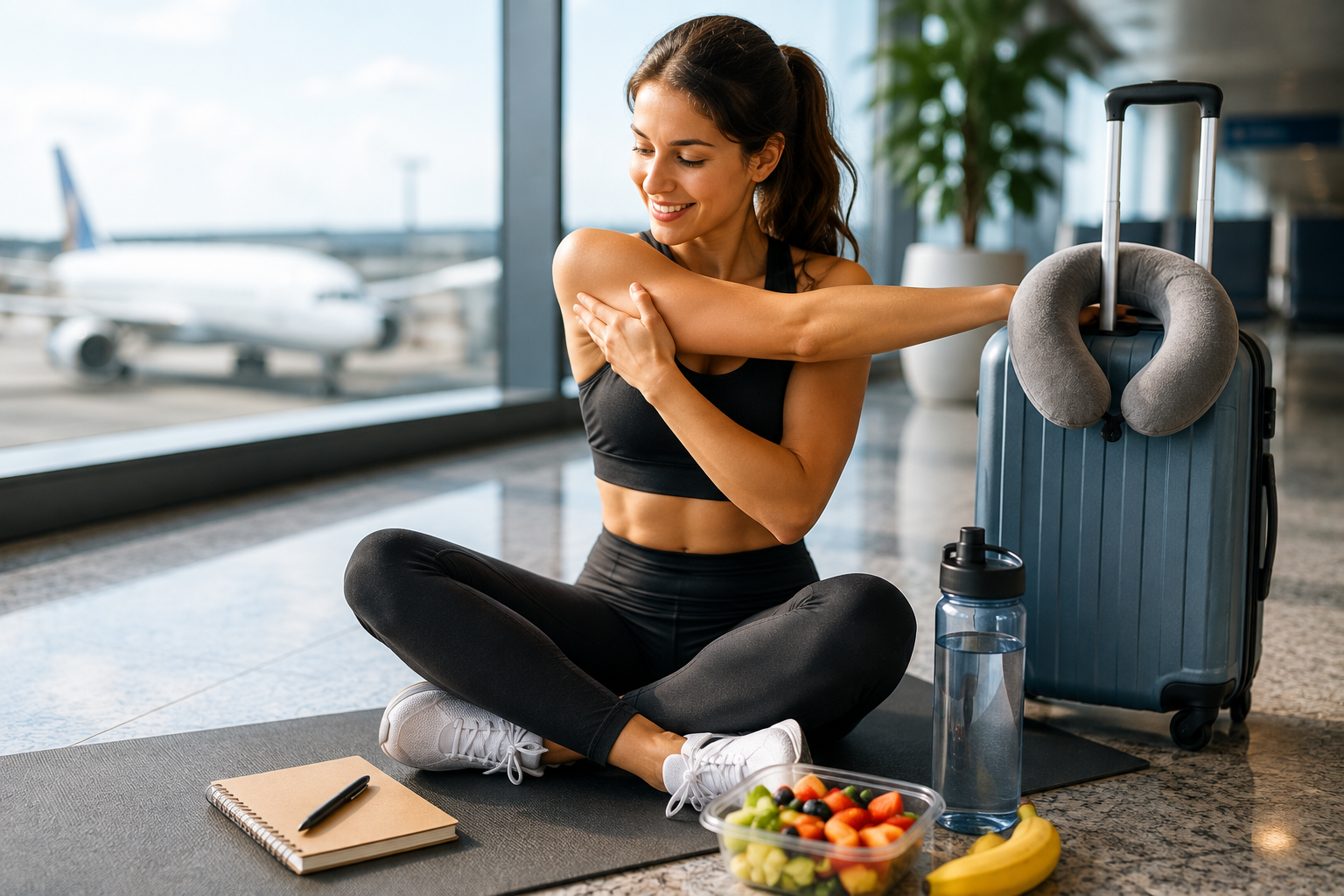
Travel is exciting, but it can also throw your body completely off track. Long flights, unfamiliar food, short nights and packed schedules make it easy to feel tired, bloated or run down before the trip is even half over. The good news is that you do not need a strict routine to feel your best. A handful of simple habits can help you stay healthy and fit while travelling, so you have the energy to enjoy every moment.
Quick Summary
- Plan your health needs before you leave: check-up, medicines and insurance
- Eat balanced meals, drink safe water and keep healthy snacks handy
- Move your body every day with walking and short workouts
- Protect your sleep, your skin and your hands from germs
- Look after your mind, and know what to do if you get unwell
In This Guide
- Plan Ahead for Your Health
- Eat Balanced Meals on the Road
- Stay Hydrated and Drink Safe Water
- Keep Moving Every Day
- Sleep Well and Manage Jet Lag
- Keep Up Good Hygiene
- Protect Yourself from Sun, Heat and Insects
- Look After Your Mental Health
- Know What to Do If You Get Sick
- Build Healthy Habits Into Every Trip
- Frequently Asked Questions
1Plan Ahead for Your Health
Staying well on the road starts before you pack your bag. A little preparation at home saves a lot of stress later, especially if you are heading abroad or traveling for several weeks.
- Book a check-up with your doctor if you have a medical condition or are traveling far
- Ask which vaccinations or precautions are recommended for your destination
- Pack enough of your regular medicines for the whole trip, plus a few extra days
- Carry them in their original packaging, along with a doctor’s note if needed
- Buy travel insurance that covers medical care and emergencies
It also helps to find out where the nearest clinic or hospital is as soon as you arrive. Save that address and your insurer’s emergency number in your phone.
This guide shares general travel advice and is not medical advice. Always check health requirements and recommendations for your destination with a doctor or an official health authority.
2Eat Balanced Meals on the Road
Trying local food is one of the best parts of travel, and you do not have to give it up to stay healthy. The goal is balance, not perfection. Enjoy the special dishes, and fill the gaps with simple, nourishing choices.
- Start the day with a proper breakfast that includes protein, such as eggs, yogurt or nuts
- Add vegetables or fruit to at least two meals a day
- Choose freshly cooked, hot food from busy places with a steady stream of customers
- Share large portions, so you can taste more without overeating
- Carry healthy snacks like nuts, dried fruit or oat bars for long transfers
Be a little careful with raw salads, unwashed fruit, ice and food that has been sitting out in the heat, especially in places where hygiene standards are uncertain. Fruit you can peel yourself, and food served piping hot, are usually safer choices.
If you have a big meal planned for the evening, keep lunch lighter. You will enjoy the dinner more, and you will not feel sluggish for tomorrow’s activities.
3Stay Hydrated and Drink Safe Water
Dehydration is one of the most common reasons travelers feel tired, dizzy or get headaches. Flights, hot weather and long walking days all increase the amount of water you need. A reusable bottle in your daypack makes it easy to sip all day.
Where tap water may not be safe, stick to sealed bottled water or use a bottle with a good filter or purification tablets. Check the product’s instructions to see which kinds of contamination it handles. In these places, also use safe water to brush your teeth, and be cautious with ice in drinks.
A simple way to check your hydration is the color of your urine. Pale yellow usually means you are drinking enough, while dark yellow is a signal to drink more water.
4Keep Moving Every Day
You do not need a gym to stay fit while travelling. Walking is already a great workout, and exploring a new city on foot can easily add up to several kilometers a day. On travel days, a little extra movement helps stiff muscles and tired legs.
- Take the stairs instead of the lift whenever you can
- Walk or cycle between sights instead of taking a taxi for short trips
- Stretch your legs every hour or two on long flights, buses or train rides
- Start the morning with a short walk to see the neighborhood in quiet light
When you want a proper workout, you can do a quick routine in your hotel room in about ten minutes. Use this table as a simple guide:
| Exercise | How Much | Why It Helps |
|---|---|---|
| Bodyweight squats | 2 sets of 12 | Strengthens legs and wakes up tired muscles |
| Push-ups (or knee push-ups) | 2 sets of 8 to 10 | Builds upper body and core strength |
| Plank | 2 holds of 20 to 30 seconds | Supports your back and posture for carrying bags |
| Lunges | 2 sets of 10 per leg | Improves balance and leg strength |
| Stretching or gentle yoga | 5 minutes | Eases stiffness after long journeys |
Listen to your body, start gently and skip any exercise that causes pain. Packing a light resistance band or skipping rope adds variety without taking up space. For more ideas on what to pack, see our guide on essential travel gear every adventurer must have.
5Sleep Well and Manage Jet Lag
Good sleep is the foundation of both energy and immunity, but hotel beds, noise and time zones can disrupt it. A few small steps make a big difference.
- Try to shift your sleep schedule gradually in the days before a long flight
- Get outside in daylight soon after you arrive, since light helps reset your body clock
- Avoid heavy meals, alcohol and too much caffeine close to bedtime
- Use earplugs and an eye mask if your room is noisy or bright
- Keep your first day light, and avoid long naps late in the afternoon
Most people feel better after a few days as their body adjusts. Giving yourself a gentle first day, instead of cramming in sightseeing, helps you recover faster.
6Keep Up Good Hygiene
Airports, public transport and busy attractions are places where germs spread easily. The most effective protection is also the simplest: clean hands.
- Wash your hands with soap and water before eating and after using the toilet
- Carry hand sanitizer for times when soap and water are not available
- Wipe down your tray table, armrests and phone on long journeys
- Avoid touching your face, especially your eyes, nose and mouth
- Keep your toothbrush covered and your towels clean and dry
Pack a few extra wipes and a small first-aid kit with plasters, antiseptic and your usual medicines, so small cuts and blisters do not become bigger problems.
7Protect Yourself from Sun, Heat and Insects
Sun and heat can quickly spoil a trip, and in some places insects can carry diseases. A little protection each day keeps you comfortable and safe.
- Apply sunscreen daily and reapply after swimming or heavy sweating
- Wear a hat, sunglasses and light, loose clothing
- Plan outdoor activities for early morning or late afternoon, and rest in the shade at midday
- Use insect repellent and cover your arms and legs in the evening in areas with mosquitoes
- Sleep under a net or in a screened room if your destination recommends it
Headache, dizziness, nausea or confusion in hot weather can be warning signs. Move to a cool place, rest, drink water and seek medical help if you do not recover quickly.
8Look After Your Mental Health
Travel can be stressful as well as joyful. Delays, language barriers and being away from your usual routine can leave you feeling anxious or drained. Looking after your mind is just as important as caring for your body.
- Do not overpack your schedule, and leave time for slow mornings and rest days
- Keep in touch with family or friends, even with a short message or call
- Take a few minutes each day for quiet time, such as a walk, journaling or deep breathing
- Limit time on social media, and enjoy the place you are actually in
- Accept that plans sometimes change, and treat surprises as part of the story
9Know What to Do If You Get Sick
Even careful travelers sometimes get unwell. Knowing the basics helps you stay calm and recover well.
- Rest and drink plenty of safe fluids, especially if you have an upset stomach or fever.
- Use oral rehydration salts if you have diarrhea and are losing fluids.
- Eat light, plain foods once you feel able to.
- Contact your hotel, your doctor or a local clinic if symptoms are severe or last more than a day or two.
- Call your insurer for guidance, and keep receipts for any care you receive.
You have a high fever, severe pain, blood in your stool or vomit, trouble breathing, signs of dehydration or symptoms that keep getting worse. Do not wait, and contact local emergency services or a hospital.
10Build Healthy Habits Into Every Trip
The best way to stay healthy and fit while travelling is to make small habits automatic, so you do not have to think about them. Choose two or three that matter most to you and repeat them every day of your trip.
For example, you might start every morning with a glass of water and a ten-minute walk, finish every day with some stretching and keep a snack in your bag. These tiny routines add up, and you return home feeling refreshed instead of exhausted.
Traveling with family? Our guide on how to travel safely with kids has extra tips for keeping children healthy and happy on the road.
Frequently Asked Questions
How can I stay fit while travelling without a gym?
Walk as much as you can, take the stairs and do a short bodyweight routine in your room, such as squats, push-ups and planks. A resistance band or skipping rope is light and easy to pack.
What should I eat on a long flight?
Choose lighter meals, drink plenty of water and bring your own snacks such as nuts, fruit or oat bars. Go easy on alcohol and caffeine, which can leave you feeling more tired and dehydrated.
Is it safe to drink tap water abroad?
It depends on the country and even the region. If you are unsure, use sealed bottled water or a reliable filter or purification method, and use safe water for brushing your teeth too. Ask your hotel or check official health guidance for your destination.
How can I reduce jet lag?
Adjust your sleep schedule gradually before you fly, spend time in daylight after you arrive, stay hydrated and keep your first day light. Most people adapt within a few days.
How do I avoid stomach problems while travelling?
Wash your hands often, choose freshly cooked hot food, avoid unsafe water and ice, and be careful with raw foods in places where hygiene is uncertain. Carry oral rehydration salts in case you need them.
Final Thoughts
Staying healthy on the road is not about strict rules or perfect routines. It is about preparing well, eating and drinking sensibly, moving every day, sleeping enough and listening to your body. Choose a few simple habits, stay flexible and enjoy the experience. When you stay healthy and fit while travelling, you have more energy for the places, people and moments that make every journey worthwhile.
Keep Planning Your Next Trip
Explore more practical advice and destination ideas on TourVister.
More Travel Tips Travel Guides