
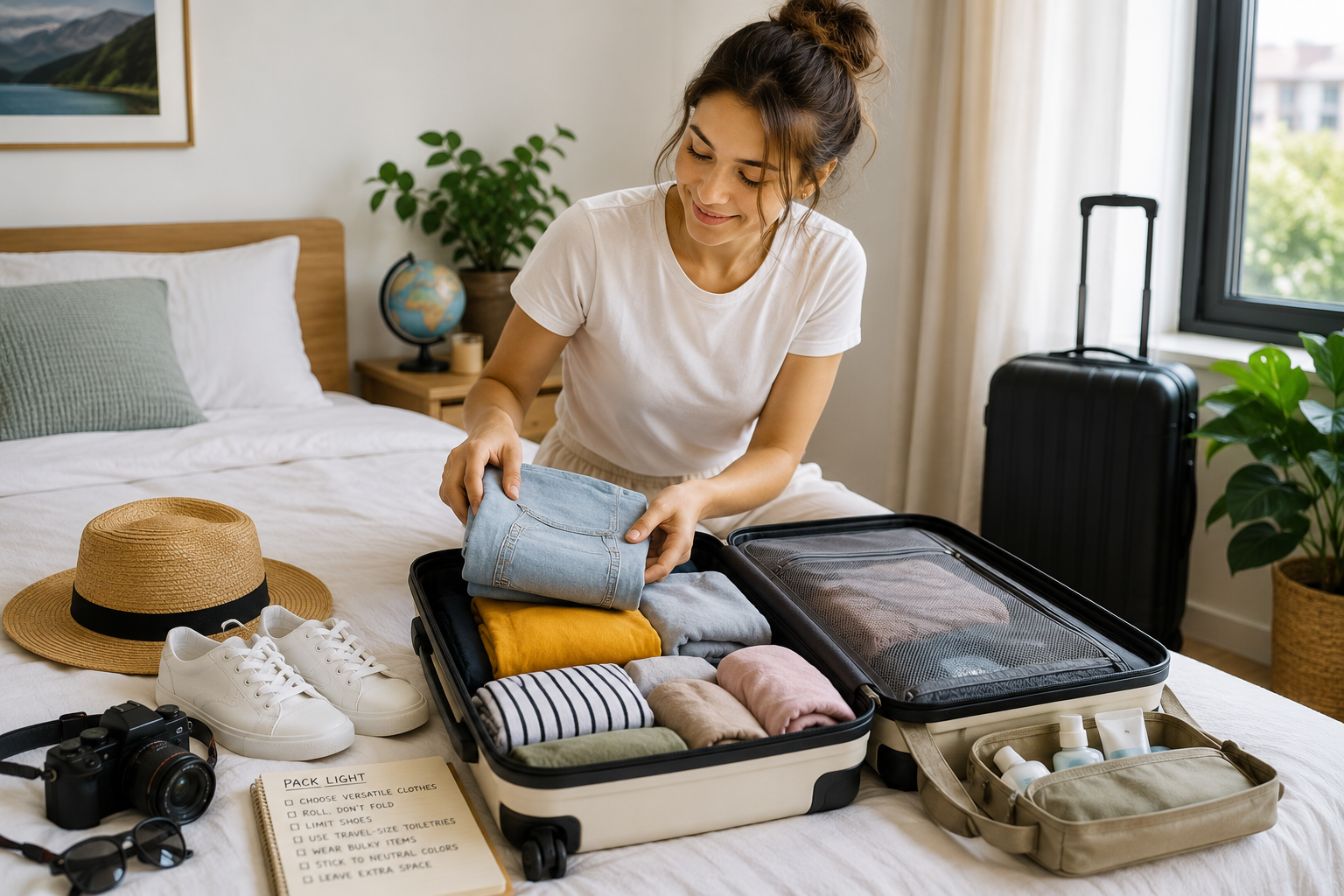
Almost every traveler has dragged a heavy suitcase over cobblestones or paid extra fees for an overstuffed bag and then barely worn half of what was inside. Packing light is not about owning special gear or giving up comfort. It is about making smart choices before you zip the bag. In this guide, you will learn how to travel light with 7 packing secrets that real travelers use to move faster, spend less and enjoy every trip more.
Quick Summary
- Choose a smaller bag first, and let it set your limit
- Build a simple wardrobe of mix-and-match neutral pieces
- Use packing cubes, rolling and layering to save space
- Wear your heaviest items and shrink your toiletries
- Swap paper and gadgets for your phone, and do a final edit before you leave
In This Guide
1Start With a Smaller Bag
The first secret sounds almost too simple: pick the smaller bag. Most people choose a suitcase and then fill it, because empty space feels like a mistake. If you start with a carry-on sized bag or a compact backpack, you are forced to think about what you actually need.
A smaller bag brings real benefits:
- You skip baggage fees on many airlines, and you never wait at the carousel
- You move quickly through stations, markets and airports
- You are less likely to lose your luggage on connecting flights
- You can walk to your hotel without needing a taxi
Before you buy or pack, check your airline’s current size and weight limits for carry-on bags, because they differ between airlines and even between ticket types. A good bag also has comfortable straps, strong zips and one or two outer pockets for items you reach for often.
Pack your bag, then lift it and walk around your room for a few minutes. If it feels heavy now, it will feel much heavier after a long day of travel. Take something out until it feels comfortable.
2Build a Mix-and-Match Wardrobe
The biggest space-eater in most bags is clothing, and most of it goes unworn. The fix is a small, flexible wardrobe where every top works with every bottom. Stick to two or three base colors, such as black, navy, grey or beige, and add one or two brighter pieces for personality.
A simple formula for a week away might look like this:
- 3 to 4 tops that match each other
- 2 bottoms, such as one pair of trousers and one pair of shorts or a skirt
- 1 warm layer, like a light sweater or fleece
- 1 light jacket or rain layer
- 5 to 7 pairs of underwear and a few pairs of socks
- 1 outfit for a nicer dinner or a visit to a place of worship
Choose fabrics that dry fast, resist wrinkles and do not hold odors, such as merino wool or synthetic blends. Always think about the weather and local dress customs. If you cannot picture at least three outfits that include an item, it probably should not make the bag.
3Pack Smarter With Cubes, Rolling and Folding
How you pack matters almost as much as what you pack. The goal is to use every bit of space without crushing your clothes.
- Put heavier items, such as shoes and toiletries, near the back panel of a backpack or by the wheels of a suitcase.
- Roll soft items like T-shirts, underwear and light trousers. Rolling saves space and reduces creases.
- Fold structured items like shirts and jackets flat, or stack them in a cube.
- Use packing cubes to group items by type, so you can find things without unpacking everything.
- Fill gaps, such as the inside of shoes, with socks, chargers or small items.
Compression cubes squeeze out extra air and can save even more room, but they also make it easy to overpack, so use them with care. Keep the things you need on the journey, like documents, medicines and a charger, in an easy-to-reach top pocket or in your daypack. For more on useful small items, read our guide on essential travel gear every adventurer must have.
4Wear Your Bulkiest Items
Your body is free luggage. The heaviest, bulkiest things you own, such as boots, a thick jacket or a sweater, take up the most room in a bag and are the easiest to wear on travel day.
- Wear your sturdiest shoes, and pack the lighter pair
- Wear your jacket, even if it is warm, and carry it over your arm in the airport if you need to
- Choose a jacket with deep pockets for your passport, phone and snacks
- Layer a sweater on top and take it off once you board
Airports and planes are often cool, so extra layers rarely feel like a burden. Once you reach your hotel, you can unpack them and switch to lighter clothes.
5Shrink Your Toiletries
Liquids are heavy, bulky and often the reason bags run into trouble at security. With a little planning, you can reduce your toiletries to a tiny pouch.
- Decant what you need into small reusable bottles
- Switch to solid options, such as shampoo bars, soap bars and toothpaste tablets
- Take only the cosmetics and skincare you use every day
- Buy items like sunscreen or shower gel at your destination if they are easy to find
- Check your airport’s rules on liquids, as many limit container sizes in hand luggage
Use one clear, zip-top pouch so security checks go smoothly, and keep any prescription medicines in their original packaging. Hotels often provide basics like soap and shampoo, so check before you pack your own.
6Go Digital and Choose Multi-Use Items
Your phone can replace a surprising number of things in your bag. A few small swaps remove weight and clutter at the same time.
- Use e-books or audio instead of paper books and guides
- Save tickets, bookings and maps on your phone, and keep a backup copy offline
- Store photos of your passport and insurance in a secure folder
- Use your phone as your camera, alarm and torch
Whenever you can, choose items that do more than one job. A light scarf can be a blanket, a towel, a head covering or a beach wrap. A good rain jacket is also a windbreaker. A universal adapter with several USB ports replaces a handful of chargers. Remember to carry a small power bank, and check your airline’s rules on carrying batteries before you fly.
7Do a Final Edit and Plan to Wash
The last secret is the one that makes the others work. Lay out everything you plan to pack on your bed, then look at it honestly. Put back anything that is only a “maybe”, anything you have not planned an outfit for and anything you can easily buy at your destination.
Next, plan to do laundry. Washing a few items every four to five days means you can carry a week of clothes for a trip of any length. You can wash small items in a sink or shower with a little soap, then hang them overnight. Quick-dry fabrics are ready by morning.
After you lay everything out, remove about a third of it. Almost every traveler who tries this finds that they never miss the items they left behind.
Use this table as a rough guide to how much to pack, depending on the length of your trip:
| Trip Length | Tops and Bottoms | Shoes | Laundry Plan |
|---|---|---|---|
| Weekend (2 to 3 days) | 2 tops, 1 bottom, 1 layer | 1 pair worn, 1 light pair at most | No laundry needed |
| One week | 3 to 4 tops, 2 bottoms, 1 to 2 layers | 2 pairs | Wash a few items once |
| Two weeks | 4 to 5 tops, 2 to 3 bottoms, 2 layers | 2 pairs | Wash every 4 to 5 days |
| Month or more | Same as two weeks | 2 to 3 pairs | Wash weekly, or use a laundry service |
The rule holds even for long trips: you carry a week of clothes, not a month of them. If you are also packing for children, our guide on how to travel safely with kids has extra ideas for family trips, and our tips on how to stay healthy and fit while travelling show what health items are worth the space.
Frequently Asked Questions
How do I travel light for two weeks?
Pack for about one week and plan to wash clothes once or twice. Choose a small number of mix-and-match pieces, wear your bulkiest items on travel days and keep your toiletries to a few small or solid items.
What size bag is best for traveling light?
A carry-on sized bag or a backpack of roughly 30 to 40 liters works well for most travelers. Always check your airline’s current carry-on size and weight limits before you go.
Is it better to roll or fold clothes?
Both work. Roll soft items like T-shirts and underwear to save space, and fold structured pieces like shirts and jackets. Packing cubes help you combine both methods neatly.
What should I never leave out when packing light?
Your documents, money, phone and charger, regular medicines and comfortable shoes. You can buy almost everything else on the road if you forget it.
Can I really pack for a long trip in a carry-on?
Yes. Many long-term travelers use a single carry-on bag by choosing versatile, quick-dry clothing and washing regularly. It takes some practice, but it makes every journey easier.
Final Thoughts
Learning how to travel light is a skill that gets easier with every trip. Start with a smaller bag, build a simple wardrobe, pack with cubes, wear your bulkiest items, shrink your toiletries, go digital and finish with an honest final edit. Each secret saves a little weight, and together they change the way you travel. A lighter bag means more freedom, less stress and more energy for the experiences you came for.
Keep Planning Your Next Trip
Explore more practical advice and destination ideas on TourVister.
More Travel Tips Budget Travel