
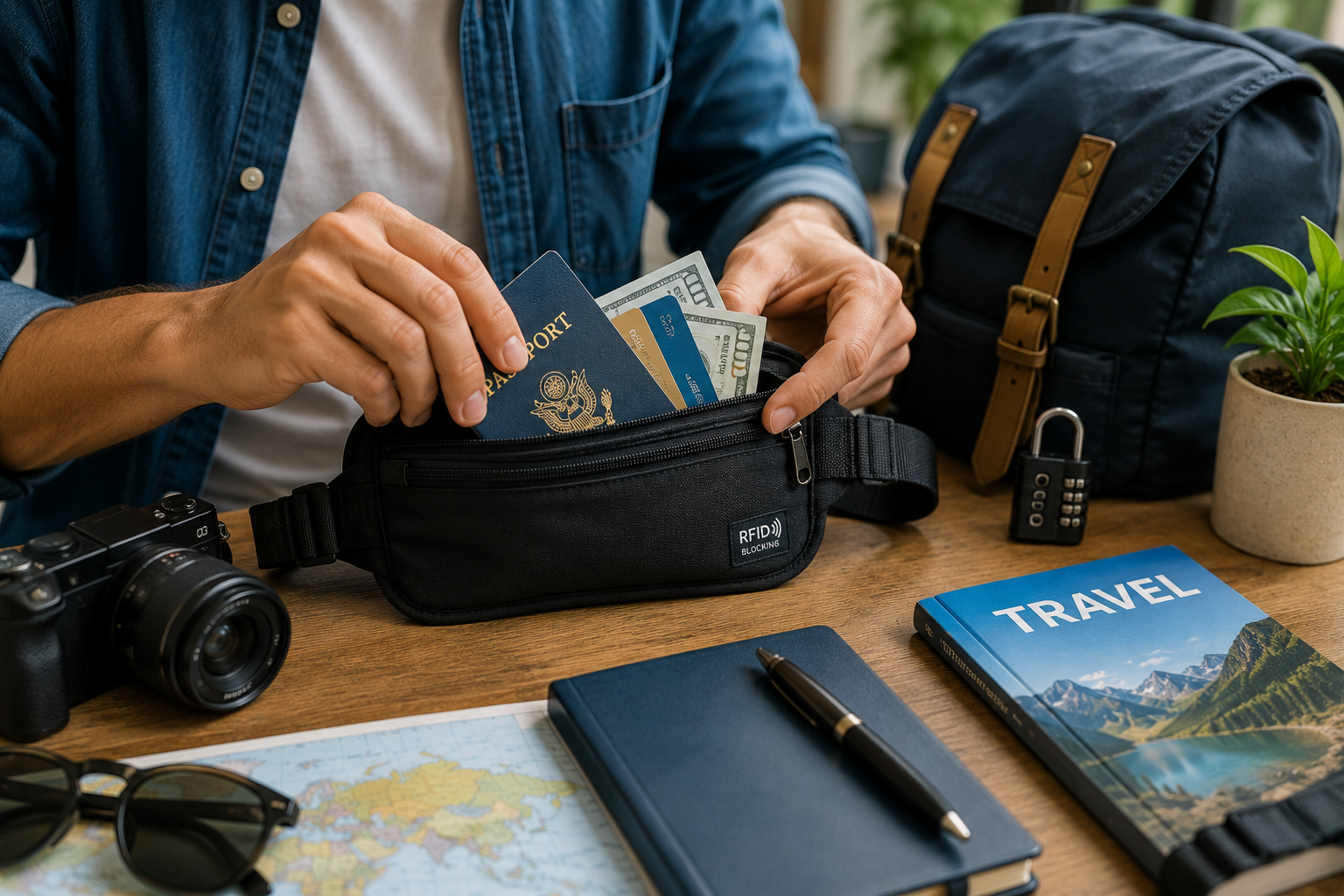
Few things can turn a dream trip into a nightmare faster than a lost wallet or a missing passport. Most travelers never have a serious problem, but a little preparation makes it far less likely and far less stressful if something does go wrong. In this guide, you will learn how to keep your money and passport safe abroad, from what to carry and how to hide it, to the scams to avoid and the steps to take if the worst happens.
Quick Summary
- Make digital and paper copies of your passport, visa, cards and insurance
- Carry only what you need each day, and split your money across several places
- Use a hidden pouch, a hotel safe and cards with security features
- Stay alert in crowds and know the most common scams
- Know exactly what to do if something is lost or stolen
In This Guide
- Know the Risks Before You Go
- Make Copies of Everything Important
- Use a Hidden Pouch or Money Belt
- Split Your Money Across Different Places
- Handle Cards and ATMs Safely
- Keep Your Passport Secure
- Protect Your Phone and Digital Life
- Stay Alert in Crowds and Transport
- Watch Out for Common Scams
- Know What to Do If Something Is Lost or Stolen
- Frequently Asked Questions
1Know the Risks Before You Go
Most thefts abroad are not dramatic. They happen in busy places where people are distracted: crowded trains, markets, airports, tourist sights and busy restaurants. Thieves look for easy opportunities, such as a phone on a table, a wallet in a back pocket or an open bag on a chair.
A quick bit of research before you travel helps you plan:
- Read your government’s official travel advice for your destination
- Check which areas or situations are known for pickpocketing or scams
- Learn the local emergency number and the address of your embassy or consulate
- Find out how common card payments are, so you know how much cash you really need
Once you know what to expect, you can take sensible precautions without becoming anxious. The goal is not to avoid enjoying the trip, but to make yourself a harder target than the person beside you.
2Make Copies of Everything Important
If your documents disappear, copies can save days of hassle. Before you leave, copy or photograph:
- The photo page of your passport and any visas
- Your travel insurance policy and its emergency phone number
- Both sides of your cards, or at least the card issuer’s emergency numbers
- Your flight and hotel bookings
Save the images in a secure, password-protected folder or cloud account, and send a copy to a trusted family member. Keep a paper set in a separate bag from the originals. Never post photos of your passport, tickets or boarding pass on social media, because they contain personal data that others can misuse.
Passport-size photos are useful if you ever need an emergency document. Carry two spare photos in your luggage, separate from your passport.
3Use a Hidden Pouch or Money Belt
A slim pouch worn under your clothes is one of the simplest ways to protect your most important items. Because thieves cannot see it, they cannot target it. Choose one made from soft, breathable fabric so it stays comfortable in warm weather.
Keep these items in it:
- Your passport, when you need to carry it
- A spare card and emergency cash
- Your travel insurance details
Do not reach into the pouch in public. Visit a restroom or a quiet corner when you need to take something out. A money belt that everyone can see on the outside of your clothes defeats the purpose.
For daily use, carry a small crossbody bag with a secure zip that sits in front of your body, or a slim wallet in a front pocket. Backpacks worn on your back are easy targets in crowds, so wear them on your front in busy places. For more ideas on small items worth packing, see our guide on essential travel gear every adventurer must have.
4Split Your Money Across Different Places
The best rule for protecting your money is never to keep all of it in one place. If you lose one wallet, one bag or one card, you should still have a backup. Spread your funds like this:
- Carry a small amount of everyday cash in an easy-to-reach pocket
- Keep a larger amount of emergency cash in your hidden pouch or hotel safe
- Take at least two different cards, and keep them in separate places
- Leave one card in your luggage or the hotel safe as a backup
Use this table as a simple guide:
| Item | Best Place to Carry It | Backup Plan |
|---|---|---|
| Passport | Hotel safe, or hidden pouch when needed | Photo and paper copy kept separately |
| Daily cash | Front pocket or small zipped wallet | Emergency cash in the hotel safe |
| Main bank card | Inside zipped bag pocket | Second card in a different bag |
| Phone | Front pocket or secure crossbody bag | Backup of photos and contacts in the cloud |
| Insurance details | Saved on your phone and printed | Copy shared with a family member |
5Handle Cards and ATMs Safely
Cards are usually safer than carrying a lot of cash, but only if you use them carefully. Before you travel, tell your bank where you are going if it asks for that, and check which fees apply to foreign payments and withdrawals. Turn on instant transaction alerts so you spot any unusual charge immediately.
- Use ATMs inside banks or in well-lit, busy places, and avoid isolated machines
- Check the card slot and keypad for anything that looks loose or added on
- Cover the keypad with your hand when you enter your PIN
- Never let anyone “help” you at an ATM or take your card away from your sight
- When paying in a shop or restaurant, keep your card within view
- If a machine offers to charge you in your home currency, it is usually cheaper to choose the local currency
Contactless payments and phone wallets can be very secure, because they do not reveal your actual card number. Keep a physical backup anyway, in case your phone dies or is stolen.
6Keep Your Passport Secure
Your passport is your most valuable travel document, and replacing it abroad takes time. In most places, a photocopy or a clear digital image is enough for everyday needs like hotel check-in or sightseeing, but rules vary, so check what is required at your destination.
When you can, leave the original in a hotel safe or a locked bag in your room. If you must carry it, keep it in your hidden pouch, not in a back pocket or an outer bag pocket. Be careful about handing your passport to anyone other than uniformed officials, and always get it back before leaving the desk or the shop.
In some countries you are legally required to carry identification at all times. Always check the official requirements for your destination before you decide to leave your passport in the hotel.
Hotel safes are convenient, but they are not perfect. Choose a safe in the room rather than at reception if possible, and avoid obvious PIN codes. A small padlock or cable for your luggage adds an extra layer of protection when you leave your room.
7Protect Your Phone and Digital Life
Your phone holds your tickets, bank apps, photos and contacts, so protecting it is just as important as protecting your wallet. A few settings can make a big difference.
- Use a strong screen lock, and turn on “find my device” features before you leave
- Enable two-factor authentication on your email and banking accounts
- Back up your photos and contacts to the cloud regularly
- Avoid using public Wi-Fi for banking, or use a trusted VPN if you must
- Do not leave your phone on cafe tables or hold it loosely near roads and platforms
- Carry a small power bank so you are never left without a working phone
Be careful with public charging stations as well. Use your own plug and cable where possible, and avoid plugging your phone into unknown USB ports.
8Stay Alert in Crowds and Transport
Pickpockets rely on distraction, so awareness is your best defense. They often work in pairs: one person creates a distraction while another takes your belongings. Stay especially alert in these situations:
- Crowded metro trains, buses and station platforms
- Busy markets, festivals and popular tourist sights
- Airport queues and baggage claim areas
- Narrow streets where someone can bump into you
Keep your bag closed and in front of you, put your phone away when you are not using it and never leave belongings on the back of a chair or under a table. If someone bumps you, spills something on you or suddenly asks for help, check your pockets and bag straight away. Do not let a stranger’s friendliness lower your guard.
At night, stay in well-lit areas, avoid carrying large amounts of cash and be careful about drinks that you leave unattended. If you are traveling with children, our guide on how to travel safely with kids shares extra advice for staying close in busy places.
9Watch Out for Common Scams
Most scams depend on you feeling rushed, flattered or polite. Knowing the common types helps you recognize them quickly.
- Fake helpers: someone offers to carry your bag, take your photo or help at a ticket machine, then asks for money or steals from you
- Overcharging: unofficial taxis, tuk-tuks or guides who set a price after the ride, so agree on the fare first or use meters and trusted apps
- Friendship bracelets and “gifts”: items placed in your hand or on your wrist, followed by a demand for payment
- Fake police: people who ask to inspect your wallet or passport, so ask for official identification and offer to go to a police station
- Closed attractions: strangers who say a place is closed and suggest another, which often leads to an overpriced shop
- Petition clipboards: distraction teams that ask for a signature while another person looks for your valuables
A calm, firm “no, thank you” and walking away is usually enough. If something feels wrong, trust your instincts and move to a busy, public place.
10Know What to Do If Something Is Lost or Stolen
Even careful travelers can be unlucky. If your passport, cards or phone go missing, act quickly and calmly. Follow these steps in order:
- Move to a safe place and take a breath. Check that you have not just misplaced the item.
- Call your bank or card issuer immediately to freeze or cancel lost cards.
- Report the loss or theft to the local police and ask for a written report, which insurers often require.
- Contact your embassy or consulate if your passport is lost or stolen. They can guide you on emergency travel documents. Bring your copies and photos.
- Use “find my device” to lock or erase a lost phone, and change important passwords.
- Notify your travel insurance company and keep all receipts and reports for your claim.
The process for replacing a passport and the documents you need vary by country. Always follow the instructions from your own government’s embassy or consulate.
Frequently Asked Questions
Should I carry my passport with me when sightseeing abroad?
In many places a photocopy or a digital image is enough for sightseeing, and you can leave the original in a hotel safe. However, some countries require you to carry identification at all times, so check the local rules for your destination.
What is the safest way to carry money abroad?
Use a mix: a small amount of cash for daily use, a larger emergency reserve hidden in a pouch or hotel safe and at least two different cards kept in separate places. Never keep everything in one wallet or bag.
Is a money belt really worth using?
Yes, especially in crowded cities and on public transport. A hidden pouch keeps your passport and emergency money out of sight, which makes you a much harder target for pickpockets.
What should I do first if my wallet is stolen?
Contact your bank right away to freeze or cancel your cards, then report the theft to the local police and notify your travel insurer. Keep a copy of the police report for your claim.
Is it safe to use ATMs abroad?
It can be, if you choose machines inside banks or in busy, well-lit places, check for anything suspicious on the card slot, cover the keypad and never accept help from strangers.
Final Thoughts
Protecting your money and passport abroad is mostly about simple habits. Make copies, spread your money across different places, use a hidden pouch, take care with cards and ATMs, stay alert in crowds and learn the common scams. If something does go wrong, a calm, step-by-step response gets you back on track quickly. With these precautions in place, you can spend less time worrying about your belongings and more time enjoying your journey.
Keep Planning Your Next Trip
Explore more practical advice and destination ideas on TourVister.
More Travel Tips Travel Guides