
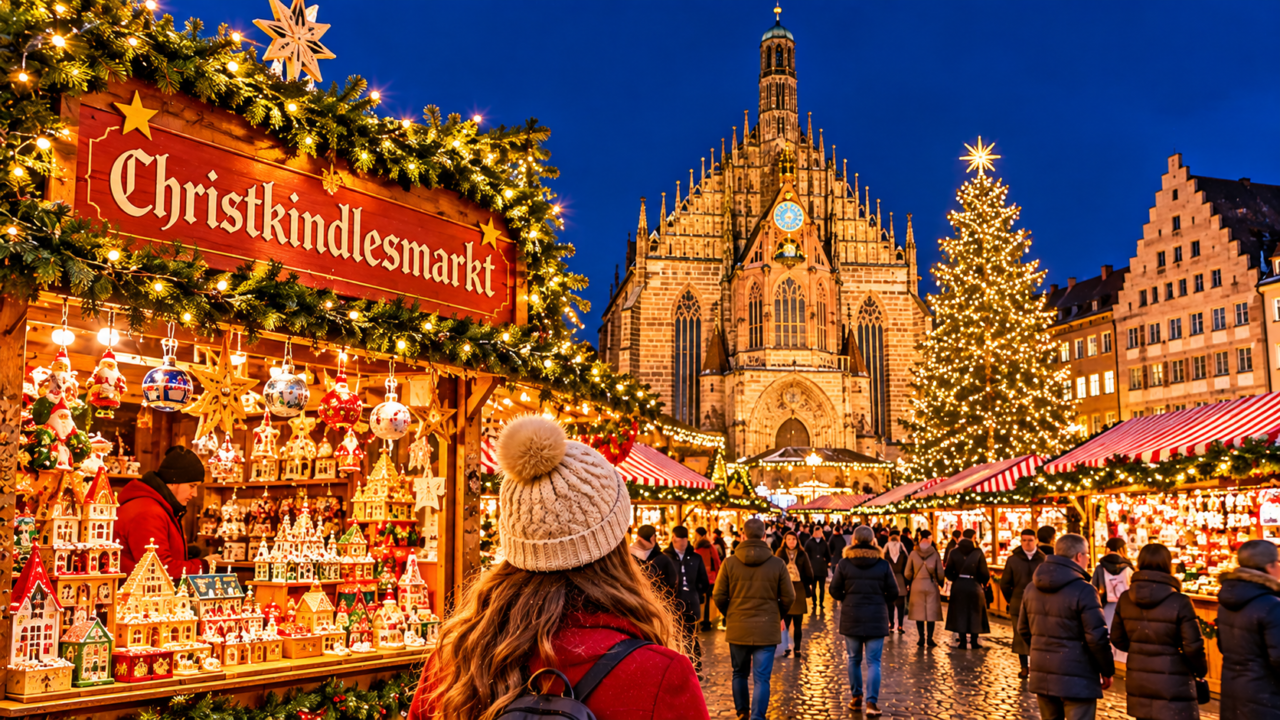
Christmas markets in Germany are the most magical way to celebrate the festive season. Picture glowing wooden stalls, the smell of mulled wine and roasted almonds, twinkling lights over medieval squares and choirs singing carols beneath a giant Christmas tree. Germany invented the Christmas market tradition, and nowhere does it better.
This guide covers the 15 best Christmas markets in Germany for 2026, with opening dates, what to eat and buy, how to get around by train, where to stay and budget tips. Whether you are travelling from the UK, the USA, Canada or elsewhere in Europe, you will find everything you need to plan an unforgettable festive trip.
Christmas markets in Germany 2026: quick facts
- Season: most markets open between mid and late November and close on 22 to 24 December
- Nuremberg: 27 November to 24 December 2026
- Munich (Marienplatz): 20 November to 24 December 2026
- Cologne Cathedral market: 16 November to 23 December 2026
- Dresden Striezelmarkt: 25 November to 24 December 2026
- Closed: many markets close on Totensonntag (22 November 2026) and close early on Christmas Eve
What Are German Christmas Markets?
A German Christmas market, known as a Weihnachtsmarkt or Christkindlmarkt, is an open-air festive fair held in a town square during Advent. Wooden huts sell handmade decorations, toys, candles and local crafts, while food stalls serve sausages, gingerbread and hot mulled wine.
The tradition dates back to the late Middle Ages. Today there are thousands of Christmas markets in Germany, from huge city markets that welcome millions of visitors to tiny village markets lit by candles.
When Do Christmas Markets in Germany Open in 2026?
Most Christmas markets in Germany open in the second half of November and run until just before Christmas. A few open earlier, and some smaller markets continue until New Year’s Eve.
Two dates are important. Many markets stay closed on Totensonntag, a day of remembrance on Sunday 22 November 2026, and most big markets close early on Christmas Eve, 24 December. If you want to visit several cities, plan your trip between late November and 23 December, when nearly all the major markets are open.
The 15 Best Christmas Markets in Germany
1. Nuremberg Christkindlesmarkt
Nuremberg’s market is the most famous of all Christmas markets in Germany and one of the oldest. Around 180 red-and-white striped stalls fill the Hauptmarkt below the Church of Our Lady. The market opens on 27 November 2026 with the Christkind, a young woman dressed as a golden angel, reading the prologue from the church balcony.
Do not miss Nuremberg’s small grilled sausages (three in a bread roll), soft Lebkuchen gingerbread and the children’s market. Check the official programme on the Nuremberg tourism website.
2. Dresden Striezelmarkt
The Striezelmarkt in Dresden is considered the oldest recorded Christmas market in Germany, dating back to 1434. It is named after Striezel, the original name for Dresden’s famous Christstollen fruit bread. Look for the giant wooden Christmas pyramid and the huge Stollen cake paraded through the city during the Stollen Festival.
3. Cologne Christmas Markets
Cologne hosts several themed Christmas markets, and the most spectacular sits right beneath the twin spires of Cologne Cathedral, with a canopy of lights over the stalls. Other markets include the Heinzels Wintermärchen in the old town, the harbour market by the Rhine and the Angel’s Market at Neumarkt. Try Reibekuchen, crispy potato pancakes served with apple sauce.
4. Munich Christkindlmarkt
Munich’s main market fills Marienplatz in front of the neo-Gothic New Town Hall, with a giant Christmas tree and live music from the balcony. Explore the medieval market at Wittelsbacher Platz, the Pink Christmas market and the nativity market, then warm up with a Feuerzangenbowle, a flaming rum punch.
5. Rothenburg ob der Tauber Reiterlesmarkt
Rothenburg’s walled medieval town looks like a Christmas card come to life. Its Reiterlesmarkt is small and atmospheric, and the town’s year-round Christmas shops make it a festive favourite. Try the local Schneeballen, crunchy pastry balls dusted with sugar.
6. Berlin Christmas Markets
Berlin has dozens of Christmas markets. Highlights include the elegant market at Gendarmenmarkt (a small entry fee applies at some times), the romantic market in front of Charlottenburg Palace and the lively market around the Kaiser Wilhelm Memorial Church.
7. Frankfurt Christmas Market
Frankfurt’s market spreads across the Römerberg, the picturesque old town square surrounded by half-timbered houses. It is one of the largest Christmas markets in Germany, with a huge Christmas tree and views of the Main river.
8. Stuttgart Christmas Market
Stuttgart is famous for the beautifully decorated roofs of its stalls, featuring Christmas figures, lights and miniature scenes. It is one of the biggest and oldest markets in Europe.
9. Aachen Christmas Market
Set around Aachen Cathedral and the Town Hall, this market is famous for Aachener Printen, a spiced gingerbread biscuit. Its position near Belgium and the Netherlands makes it a popular cross-border trip.
10. Heidelberg Christmas Market
Heidelberg’s market stretches across several squares in the old town, with the castle glowing on the hillside above. An outdoor ice rink adds extra festive fun.
11. Hamburg Christmas Markets
Hamburg’s Rathausmarkt market sits in front of the grand Town Hall, and a flying Santa sleigh passes overhead several times every evening. The city also has a lively harbour atmosphere and many smaller markets.
12. Esslingen Medieval Christmas Market
Near Stuttgart, Esslingen transforms into a medieval village with costumed traders, jugglers, fire shows and traditional crafts.
13. Leipzig Christmas Market
Leipzig’s historic market is one of the oldest in Germany, filling the old town with stalls, a giant Advent calendar and musical performances.
14. Trier Christmas Market
Set in front of Trier Cathedral, in Germany’s oldest city, this market combines Roman history with festive charm. It is a lovely stop for a Moselle valley trip.
15. Essen International Christmas Market
Essen opens earlier than most, in mid-November, and features stalls from many countries, making it a great choice for an early trip.
Unique Christmas Markets in Germany
Beyond the famous city squares, some of the most memorable Christmas markets in Germany are held in unusual places. Medieval castles, palace courtyards, forests and even underground caves host festive markets with a special atmosphere. Castle markets often feature costumed performers, torch-lit paths and traditional crafts, while smaller village markets may only open for a single weekend in Advent.
If you have a car or plan regional train trips, look for these smaller Christmas markets in Germany. They are usually less crowded, more local and often cheaper than the big city markets.
Christmas Markets in Germany at Night
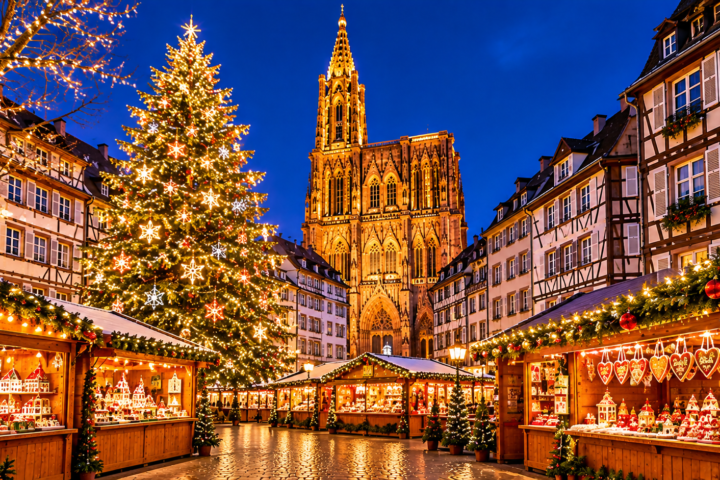
The magic of Christmas markets in Germany truly shines after dark. Thousands of fairy lights glow above the wooden stalls, giant Christmas trees sparkle in the town squares and the smell of mulled wine and grilled sausages fills the cold air. Evenings are also the busiest time, especially on Fridays and Saturdays, so arrive in the late afternoon if you want to see the lights come on without the biggest crowds.
2026 Dates for Popular Christmas Markets in Germany
| Market | 2026 dates | Good to know |
|---|---|---|
| Nuremberg | 27 Nov to 24 Dec | Opening ceremony on the first evening |
| Munich (Marienplatz) | 20 Nov to 24 Dec | Closed 22 Nov; closes early on 24 Dec |
| Cologne (Cathedral) | 16 Nov to 23 Dec | Closed on Totensonntag |
| Dresden (Striezelmarkt) | 25 Nov to 24 Dec | Stollen Festival in December |
| Heidelberg | 23 Nov to 22 Dec | Ice rink in the old town |
| Trier | 20 Nov to 22 Dec | Great for a Moselle trip |
| Essen | 13 Nov to 23 Dec | One of the earliest openings |
Dates can change, so always check the official city tourism website before you travel. Opening hours are usually from late morning until 8 or 9 pm.
What to Eat and Drink at Christmas Markets in Germany
- Glühwein: hot mulled wine with spices, served in a festive mug.
- Kinderpunsch: a warm, alcohol-free fruit punch for children and non-drinkers.
- Bratwurst: grilled sausages in a bread roll, with regional versions in every city.
- Lebkuchen: soft spiced gingerbread, a Nuremberg speciality.
- Gebrannte Mandeln: warm roasted almonds coated in caramelised sugar.
- Reibekuchen or Kartoffelpuffer: crispy potato pancakes with apple sauce.
- Stollen: rich fruit bread dusted with sugar, especially in Dresden.
- Schupfnudeln: pan-fried potato noodles with sauerkraut.
- Crêpes and waffles: sweet treats with chocolate or cinnamon sugar.
The Mug Deposit (Pfand)
When you buy a hot drink, you usually pay a small deposit for the mug. Return the mug to any stall at the same market to get your deposit back, or keep it as a souvenir. Many markets have a new mug design each year, which makes them popular collectibles.
What to Buy at Christmas Markets in Germany
- Hand-carved wooden ornaments and nutcrackers from the Ore Mountains.
- Christmas pyramids and smoking incense figures (Räuchermännchen).
- Glass baubles and handmade candles.
- Gingerbread hearts with iced messages.
- Prune figures (Zwetschgenmännle) in Nuremberg.
- Woollen hats, scarves and gloves.
Prices vary widely, so compare a few stalls before buying. Handmade items are more expensive but make lasting souvenirs.
How to Travel Between Christmas Markets in Germany
Germany’s rail network makes it easy to visit several markets in one trip. High-speed ICE trains connect major cities such as Munich, Nuremberg, Frankfurt, Cologne and Berlin, while regional trains reach smaller towns like Rothenburg and Esslingen.
- Book early: Deutsche Bahn’s saver fares are much cheaper when booked in advance. Check timetables on the official Deutsche Bahn website.
- Use regional passes: the Deutschland-Ticket monthly pass covers local and regional trains, buses and trams across Germany.
- Group tickets: regional day tickets for groups can be excellent value.
- Base yourself in one city: stay in a hub like Cologne, Frankfurt or Munich and take day trips to nearby markets.
Best Christmas Market Itineraries
5 Days in Bavaria
Start in Munich for two days, take the train to Nuremberg for its famous market, then spend a day in Rothenburg ob der Tauber before returning to Munich or Nuremberg.
4 Days Along the Rhine
Base yourself in Cologne, explore its many markets, then take day trips to Aachen and Düsseldorf. Add Trier for a Moselle valley detour.
5 Days in Eastern Germany
Combine Berlin’s markets with Dresden’s Striezelmarkt and Leipzig’s historic market, all connected by fast trains.
Where to Stay Near Christmas Markets in Germany
Hotels near the biggest Christmas markets in Germany fill up quickly, especially on weekends in December. Book as early as possible, and consider staying slightly outside the old town near a train or tram stop to save money.
Weekdays are cheaper and less crowded than weekends. If your dates are flexible, visit from Monday to Thursday for better hotel prices and a calmer atmosphere.
Christmas Markets in Germany on a Budget
- Entry to most Christmas markets is free.
- Eat at market stalls instead of restaurants for cheap, filling meals.
- Return your mug to get your deposit back.
- Book train tickets early and use regional passes.
- Visit on weekdays and stay near public transport.
- Pack light to avoid baggage fees with our carry-on packing list.
For more ways to save on a European trip, read our guides to Paris on a budget, Rome on a budget and London on a budget.
What to Wear
German winters can be cold, damp and windy, with temperatures often near or below freezing in the evening. Dress in warm layers, with a thermal base layer, a warm sweater and a waterproof winter coat.
Wear comfortable waterproof boots, as cobbled squares can be wet or icy. A hat, scarf and gloves are essential, especially when you are standing outside for hours enjoying the markets.
Christmas Markets in Germany With Kids
Children love Christmas markets. Many have carousels, Ferris wheels, puppet shows, nativity scenes and visits from Santa or St. Nicholas. Nuremberg has a dedicated children’s market, and many cities offer ice rinks.
Visit in the afternoon when crowds are smaller, and try Kinderpunsch and gingerbread. For more family tips, read our guide on how to travel with kids.
Before You Go: Entry Rules
Visitors from the UK, the USA, Canada and many other countries can visit Germany without a visa for short stays of up to 90 days in any 180-day period. The EU’s Entry/Exit System (EES) records fingerprints and a photo at the border on your first visit.
The ETIAS travel authorisation is not yet operating, but it will be required in the future. Read our guide to ETIAS and EES for the latest updates.
Safety and Practical Tips
- Carry some cash, as smaller stalls may not accept cards, although card payment is becoming common.
- Keep valuables secure in crowded markets, especially in the evening.
- Expect security checks and barriers at entrances to big markets.
- Learn a few German phrases, such as “Danke” (thank you) and “Frohe Weihnachten” (Merry Christmas).
- Dial 112 in an emergency.
Travel insurance protects your trip if winter weather disrupts your plans. Read our guide to travel insurance before you book.
Tips for Visiting Christmas Markets in Germany
- Arrive just before dusk to see the markets light up.
- Visit big markets on weekdays to avoid the heaviest crowds.
- Book flights early using our guide to finding cheap flights.
- Check opening times for Totensonntag and Christmas Eve.
- Find more inspiration on the official German National Tourist Board website.
Best Time to Visit Christmas Markets in Germany
The best time to visit is from late November to mid-December. Early in the season, crowds are smaller and hotel prices are lower. The weekends of Advent are the busiest, with the most events and the biggest crowds.
If you want snow, visit Bavaria or eastern Germany later in December, although snow is never guaranteed. For more seasonal ideas, read our guide to the best time to visit Europe.
Common Mistakes to Avoid
- Arriving on Christmas Day, when most big markets have already closed.
- Booking hotels too late for December weekends.
- Forgetting to return your mug and collect your deposit.
- Underestimating the cold and wearing the wrong shoes.
- Trying to visit too many cities in too few days.
Frequently Asked Questions
When do Christmas markets in Germany open in 2026?
Most open between mid and late November 2026 and close between 22 and 24 December. Nuremberg runs from 27 November to 24 December 2026.
Which is the best Christmas market in Germany?
Nuremberg, Dresden, Cologne and Munich are the most famous, while Rothenburg ob der Tauber is one of the most charming small-town markets.
Are Christmas markets in Germany free?
Yes, most are free to enter. A few special markets or areas charge a small entry fee at busy times.
Are Christmas markets open on Christmas Day?
Most major markets close on 23 or 24 December. A few smaller markets reopen after Christmas, so check before you travel.
Can I pay by card at German Christmas markets?
Many stalls now accept cards, but it is still wise to carry some cash for smaller vendors.
Final Thoughts
Christmas markets in Germany offer a festive experience you will never forget. Sip Glühwein beneath twinkling lights, taste gingerbread in Nuremberg, admire Cologne Cathedral glowing above the stalls and wander medieval squares filled with music and laughter.
Book early, plan your route by train and leave time to simply soak up the atmosphere. Save this guide and start planning your magical Christmas trip today.
Explore more Europe travel guides or visit the TourVister home page for more inspiration.



2 comments