
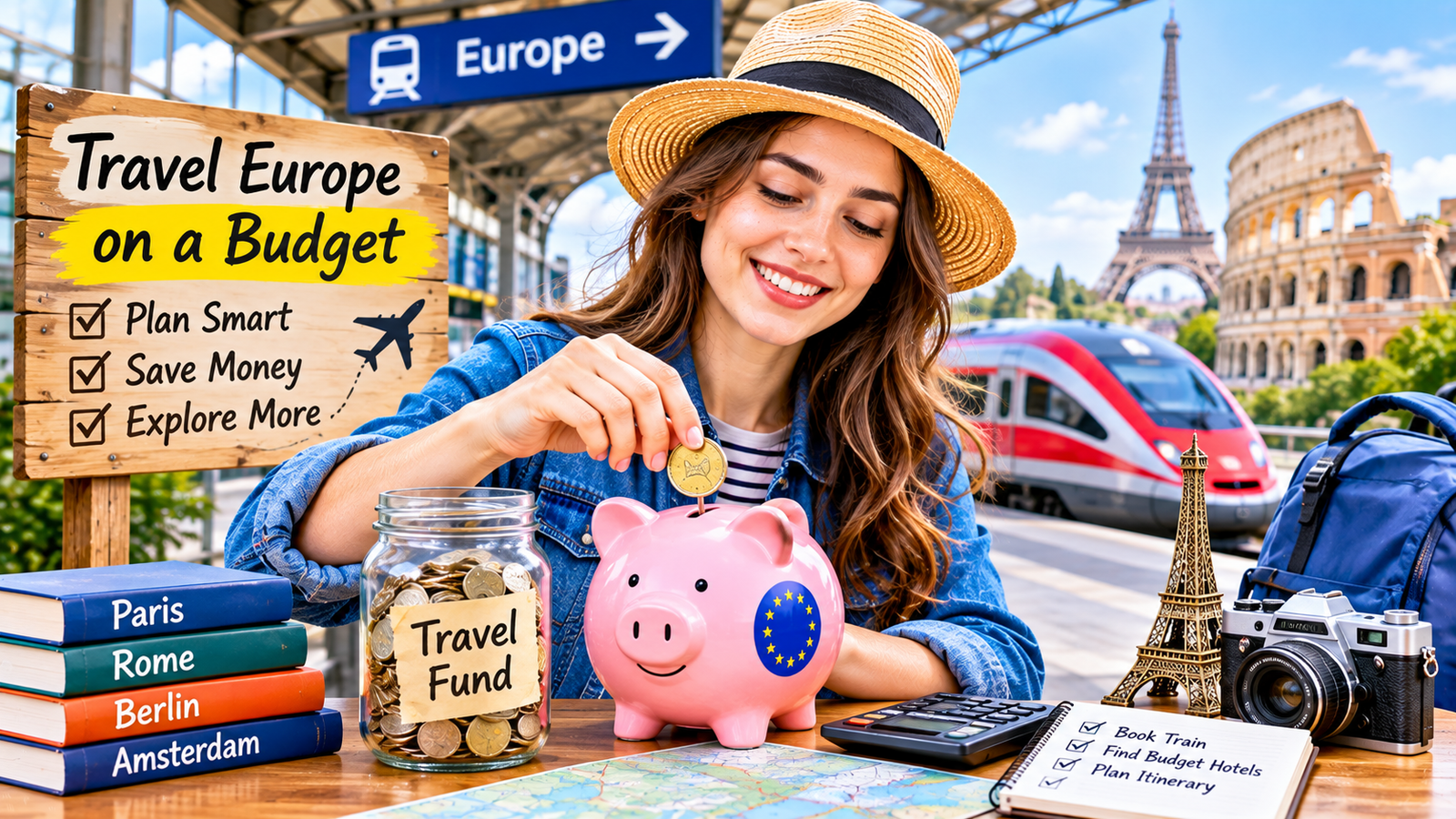
Europe has a reputation for being expensive, and in some cities it certainly can be. But thousands of people travel Europe on a budget every year, and they still see famous sights, eat well and have a great time. The secret is not to spend less on everything, but to spend wisely on the things that matter. In this guide, you will learn how to travel Europe on a budget with 10 smart ways to save money on flights, trains, accommodation, food and activities. Whether you are a student, a backpacker or a family, these tips will help you travel Europe on a budget without feeling that you are missing out.
Quick Summary
- To travel Europe on a budget, choose shoulder seasons and mix pricey cities with cheaper ones
- Book flights and trains early, compare prices and watch out for baggage fees
- Save on rooms with hostels, guesthouses and stays slightly outside the center
- Eat like a local with markets, set lunch menus and picnics
- Use free sights, avoid card and currency fees and track your spending daily
Table of Contents
- Why You Can Travel Europe on a Budget
- Travel in the Shoulder Season
- Choose Affordable Countries and Cities
- Fly Smart and Book Early
- Get Around Cheaply
- Save on Accommodation
- Eat Well for Less
- Enjoy Free and Low-Cost Activities
- Avoid Fees and Money Leaks
- Cut Small Costs: Phone, Bags and Water
- Track Spending and Keep a Buffer
- Travel Europe on a Budget: Savings Guide
- Frequently Asked Questions
Why You Can Travel Europe on a Budget
Europe is a patchwork of very different price levels. A week in one capital can cost as much as two weeks in a cheaper region, and the difference is not always about quality. Great food, beautiful old towns and excellent public transport exist at every price level. That is why it is entirely possible to travel Europe on a budget, as long as you plan with price in mind.
Budget travel in Europe also has a big advantage over many other regions: the transport is superb, and many of the best things are free. You can wander old streets, visit public squares, cross historic bridges and relax in parks without paying a cent. If you want to travel Europe on a budget, you should aim to build days around these free experiences and add one or two paid highlights.
The mindset matters too. To travel Europe on a budget, you do not need to sleep in the cheapest bed or skip every museum. You decide what you value, spend more on those things and save on the rest. If you are still deciding where to go, read our guide on how to plan a trip to Europe for the full planning steps, and use this article to bring the cost down.
1Travel in the Shoulder Season
Timing is one of the biggest ways to travel Europe on a budget. Prices for flights, hotels and even attractions climb in July and August, and they jump again around Christmas, Easter and big festivals. Moving your dates by a few weeks can save a lot of money.
- Spring (April to early June): mild weather, fewer crowds and reasonable prices
- Autumn (September to October): still warm in the south, with lower prices than midsummer
- Winter (November to March): the cheapest time for flights and hotels in many cities, apart from the holiday period
- Midweek travel: flights and trains are often cheaper from Tuesday to Thursday than on weekends
Weather is the trade-off. Winter means shorter days, and some seaside places close for the season. If you want to travel Europe on a budget and still enjoy good weather, aim for May, early June and September. Check school holidays and local events too, because even in the cheap seasons, a big festival can double room prices in a single city.
Use the flexible date view on flight search sites. Moving your trip by two or three days can change the price a lot, and it costs you nothing to check.
2Choose Affordable Countries and Cities
Where you go has a bigger effect on your costs than almost any other choice. To travel Europe on a budget, mix expensive places with cheaper ones, and do not spend your whole trip in the priciest cities.
Use this table as a rough guide to relative prices. It is not exact, because costs change by city, season and year, but it shows the general pattern:
| Region | Example Places | Typical Cost Level | Budget Tip |
|---|---|---|---|
| Northern and Western Europe | Switzerland, Norway, UK, France | Higher | Stay short, cook your own meals and use free sights |
| Southern Europe | Spain, Portugal, Italy, Greece | Medium | Use set lunch menus and travel outside high summer |
| Central Europe | Czechia, Hungary, Austria, Poland | Lower to medium | Great value for city breaks and old towns |
| Eastern Europe and the Balkans | Romania, Bulgaria, Croatia, Albania | Lower | Check transport links before you plan a long route |
Even within one country, prices differ widely. A smaller city can cost much less than the capital, and it is often calmer. To travel Europe on a budget, think about adding a few smaller towns, and you can still visit famous places for a short time. For inspiration on how to combine places, see our guides on the landmarks in Rome and the mountain towns in Switzerland, and then balance them with cheaper stops.
3Fly Smart and Book Early
Flights are often your biggest single cost, so a smart approach helps you travel Europe on a budget from the start. Compare prices across several search tools, and then check the airline’s own website before you book.
- Set price alerts for your route and book when the price looks fair
- Compare nearby airports, since a second airport can be much cheaper
- Consider flying into one city and leaving from another to avoid doubling back
- Be careful with budget airlines, because bags, seats and check-in can add extra fees
- Travel with only a cabin bag when you can, since it removes one of the biggest add-on costs
Look at the full price after bags and seats, not only the headline fare. A cheap ticket with an expensive bag fee may cost more than a regular fare. If you want to avoid paying for a checked bag, our guide on how to travel light shows how to fit everything in one small carry-on. Our list of the best travel apps also includes flight comparison and price alert tools.
4Get Around Cheaply
Transport can quietly eat your budget, but Europe gives you many cheap options. To travel Europe on a budget, choose the right type of transport for each journey.
- Trains: comfortable and central, and often much cheaper when booked early for long routes
- Buses: usually the cheapest way between cities, though slower
- Low-cost flights: good for long distances, but include airport transfers and baggage in your comparison
- Local passes: day or multi-day tickets for metros and trams can be cheaper than single rides
- Walking: free, healthy and often the best way to see old city centers
Compare a rail pass with single tickets for your actual route before you buy, because a pass is not always the cheapest choice, especially if you plan only a few long journeys. Some fast trains need seat reservations, so check the rules. Choose accommodation near a station or a metro stop, and you save on taxis.
5Save on Accommodation
Accommodation is another major cost, and it is where you can often save the most when you travel Europe on a budget. The cheapest option is not always the best value, so think about location, safety and what is included.
- Consider hostels, which often have private rooms as well as dorms, and many have a kitchen
- Look at guesthouses, small family-run hotels and apartments for longer stays
- Choose a place a few metro stops from the center, where prices are often lower and streets are quieter
- Choose rooms with free breakfast or a kitchen, so you can save on meals
- Book refundable rates when you can, and watch for city taxes added at check-in
Read recent reviews carefully, especially about cleanliness, noise and safety. Keep your documents and valuables secure in shared spaces, and use a lock for lockers. For more advice, read our guide on how to keep your money and passport safe abroad. Staying longer in fewer places also lowers the average cost per night and saves transport money.
6Eat Well for Less
Food is one of the great pleasures of Europe, and you do not need to spend a lot to enjoy it. If you want to travel Europe on a budget, change the way you eat rather than skipping meals.
- Eat your main meal at lunch, when many restaurants offer a fixed menu at a lower price than dinner
- Shop at markets and supermarkets for breakfast, snacks and picnics
- Avoid restaurants right beside the main sights, which are often more expensive and less good
- Walk a few streets away and choose places full of local customers
- Carry a refillable water bottle, since tap water is safe to drink in many European countries, but check locally
A picnic of bread, cheese, fruit and local specialties in a park or by a river is cheap, delicious and one of the nicest ways to spend an afternoon. Street food and bakeries are also good value. Check local tipping customs, because in some countries service is already included, while in others a small tip is expected.
7Enjoy Free and Low-Cost Activities
Some of the best experiences in Europe cost nothing. To travel Europe on a budget, build your days around these, and add only the paid attractions you really want.
- Walk through old towns, squares, bridges and waterfronts
- Visit parks, gardens, churches and markets, many of which are free to enter
- Look for free or discounted museum days, student and youth prices and evening opening hours
- Join a free walking tour, and tip your guide what you can afford
- Enjoy viewpoints, sunsets and street performers
Before you buy a city pass, add up the sights you really plan to visit and compare the pass price with single tickets. A city card is only worth it if you use it a lot. Book timed tickets for the most popular places to avoid long queues, and check official websites for current prices, because third-party sellers sometimes charge more.
8Avoid Fees and Money Leaks
Small fees add up quickly, and they are one of the easiest things to fix when you travel Europe on a budget. A little preparation before you leave can save a surprising amount.
- Use a card with low or no foreign transaction fees, and check the fees for ATM withdrawals
- If a machine or a shop asks whether you want to pay in your home currency or the local one, choose the local currency
- Avoid exchanging money at airports and tourist booths, which often have poor rates
- Withdraw larger amounts less often, if the fee is a flat rate, but keep your cash safe
- Check the total price before you pay, including service charges, taxes and cover charges
Be careful with scams that target tourists, such as overpriced taxis or friendly strangers who ask for money. Our guide on how to keep your money and passport safe abroad explains the most common ones. For official travel advice about specific countries, you can also read the UK foreign travel advice or the U.S. Department of State travel site.
9Cut Small Costs: Phone, Bags and Water
Many travelers focus on the big items and forget the small daily costs, which can add up. A few simple habits help you travel Europe on a budget in the background.
- Compare roaming, a local SIM and an eSIM before you fly, and download offline maps
- Use free Wi-Fi carefully, and avoid banking on public networks
- Pack light to avoid baggage fees, and bring a small laundry kit to wash clothes
- Bring a reusable bottle, a small daypack, a travel adapter and snacks for long journeys
- Download tickets and bookings so you avoid printing fees
Good gear saves money in the long run. For ideas on small items that earn their place, see our list of essential travel gear every adventurer must have. The right apps can also help you compare prices and save, and our guide to the best travel apps shows the ones that are worth installing.
10Track Spending and Keep a Buffer
The last step to travel Europe on a budget is the one that keeps all the others working: know what you are spending. A simple tracking habit stops small purchases from becoming a big surprise at the end of the trip.
- Set a daily spending limit for food, local transport and activities, and keep accommodation and flights separate.
- Record your spending every evening in a notes app or a budgeting app.
- Add up the totals every few days, and adjust the next days if you are over or under.
- Keep a small buffer of about ten to fifteen percent for emergencies and surprises.
- Plan one “treat” day or meal, so you do not feel deprived and are less likely to overspend later.
If you are traveling in a group, use an expense-sharing app so that costs are split fairly. At the end of each trip, check what you spent against your plan, and use that to plan your next one. Travelers who track their money usually find it much easier to travel Europe on a budget again and again.
Travel Europe on a Budget: Savings Guide
Use this table as a quick reminder of where you can save the most when you travel Europe on a budget, and which mistakes to avoid. Prices change, so compare real offers for your dates.
| Cost Area | How to Save | Mistake to Avoid |
|---|---|---|
| Flights | Book early, compare airports and travel midweek | Ignoring baggage and seat fees |
| Transport | Book trains in advance, use buses and walk | Buying a rail pass without comparing tickets |
| Accommodation | Choose hostels, guesthouses and stays outside the center | Booking non-refundable rooms without checking reviews |
| Food | Eat a fixed lunch menu, shop at markets and picnic | Eating next to major attractions |
| Activities | Use free sights and free museum days | Buying a city pass you will not use |
| Money | Use low-fee cards and pay in local currency | Exchanging cash at airports |
| Phone and extras | Use an eSIM or a local SIM and offline maps | Roaming without checking the cost |
Travel Europe on a Budget: Quick Checklist
If you only remember a few ideas from this guide, keep these in mind. To travel Europe on a budget, you do not need to give up comfort or fun. You need to make a few smart choices and repeat them every day.
- Travel in the shoulder season, and mix expensive and cheaper places
- Book flights and trains early, and avoid hidden baggage fees
- Stay near transport, and choose rooms with a kitchen or breakfast
- Eat a big lunch, shop at markets and enjoy free sights
- Use low-fee cards, track your spending and keep a small buffer
Travelers who travel Europe on a budget successfully usually share the same secret: they plan a little, stay flexible and choose experiences over expensive extras.
Frequently Asked Questions
How can I travel Europe on a budget as a first-timer?
Choose the shoulder season, pick two or three well-connected countries and book flights and trains early. Stay in hostels or guesthouses, eat a big lunch and shop at markets, and track your spending every day. A simple plan keeps costs low and stress lower.
What is the cheapest time of year to travel Europe?
Winter, from about November to March excluding the holidays, is usually the cheapest time for flights and hotels. Spring and autumn also offer good value with better weather, and they are often the best choice if you want to travel Europe on a budget and still enjoy the outdoors.
Which European countries are cheapest to visit?
Central, Eastern and Balkan countries, such as Czechia, Hungary, Poland, Romania and Bulgaria, are usually cheaper than Western and Northern Europe. Prices change, so compare costs for the cities and dates you want.
Is a rail pass worth it when I travel Europe on a budget?
Sometimes, but not always. Compare the pass price with single tickets for your actual route, and remember that some trains need extra seat reservations. For a few long journeys, advance tickets can be cheaper than a pass.
How can I save money on food in Europe?
Eat your main meal at lunch, when fixed menus are cheaper, and shop at markets and supermarkets for breakfast and picnics. Avoid restaurants beside major sights, carry a refillable bottle and check local tipping customs.
Final Thoughts on How to Travel Europe on a Budget
You can travel Europe on a budget without missing the places that matter most. Choose the right season, mix cities with cheaper stops, book flights and trains early, stay in good-value rooms, eat like a local and enjoy the many free sights. Avoid hidden fees, track your spending and keep a small buffer. With a little planning, you will travel Europe on a budget, return home with great memories and still have money left for your next adventure.
Keep Planning Your Next Trip
Explore more practical advice and destination ideas on TourVister.
Budget Travel Travel Guides